

Cannabis in the Workplace: Legal in Many States, But Corporate America Is Still Playing Catch-Up (2026 Update)
Cannabis in the Workplace: Legal in Many States, But Corporate America Is Still Playing Catch-Up (2026 Update)



You finish a relaxing Friday night with legal cannabis in your state. Monday morning rolls around, and a random drug test at work could still cost you your job. This is the reality for millions of Americans in 2026.
The Legal Disconnect: State Progress vs. Federal and Corporate Inertia
Cannabis is now recreationally legal in 24 states plus D.C., with medical programs in over 40. Yet federally, recreational cannabis remains heavily restricted, and most employers maintain zero-tolerance policies.
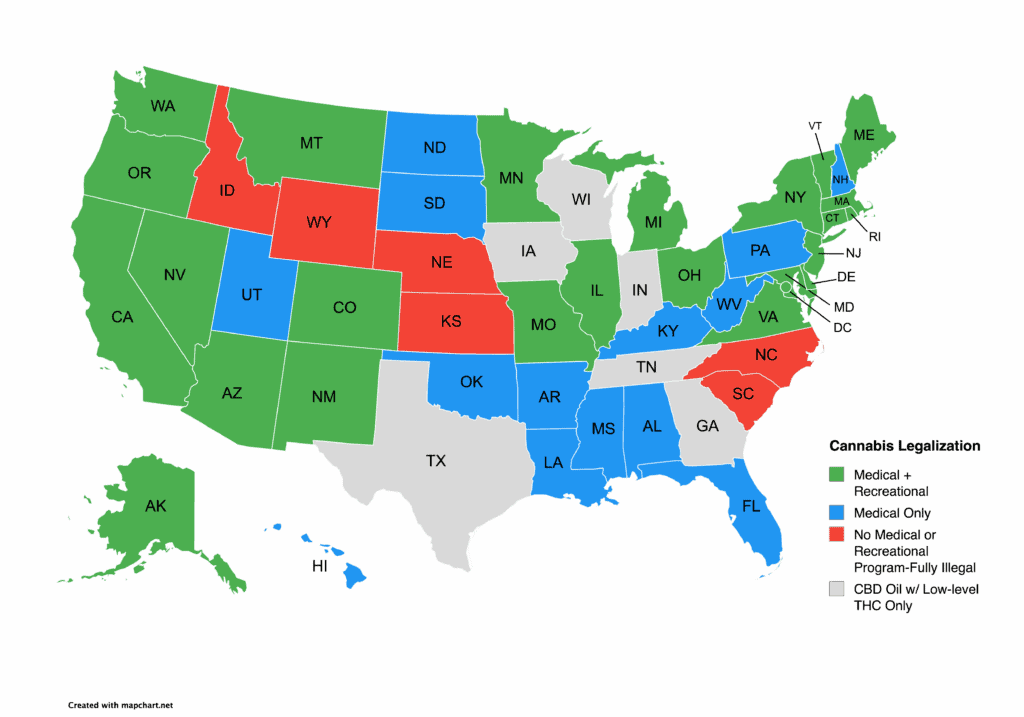

Key takeaway: Even in legal states like New Jersey (your home base), employers can often discipline or fire workers for off-duty cannabis use detected via drug tests. Only about 9–10 states have strong “off-duty conduct” protections.
The Data: Cannabis Dominates Workplace Drug Tests
Workplace drug positivity rates hit 4.7% in 2026 — the highest in over a decade — with marijuana accounting for nearly half (49%) of all positives.
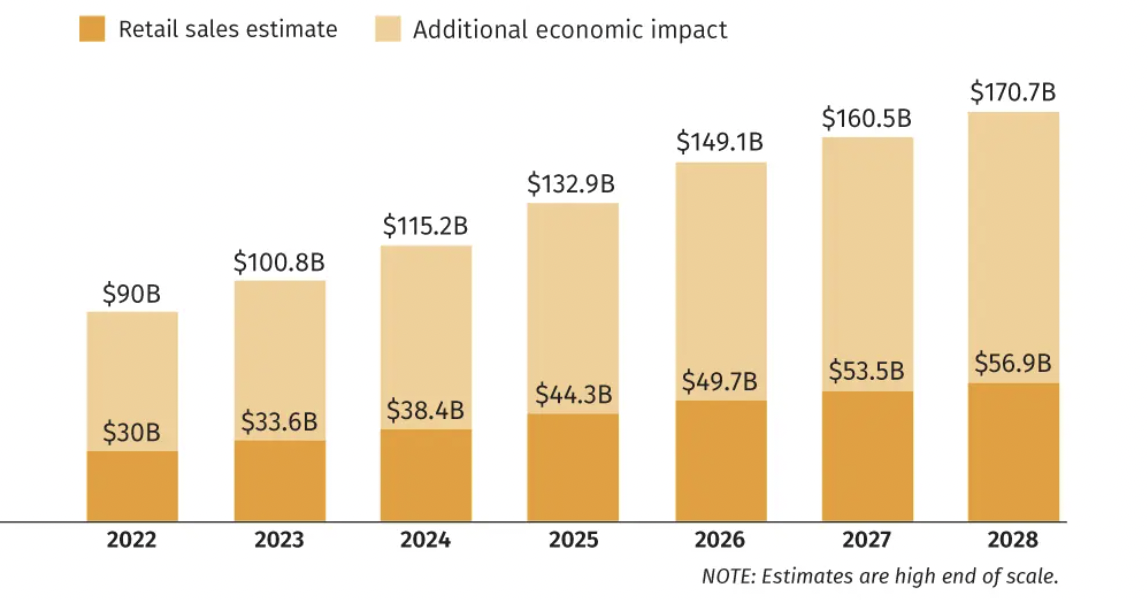
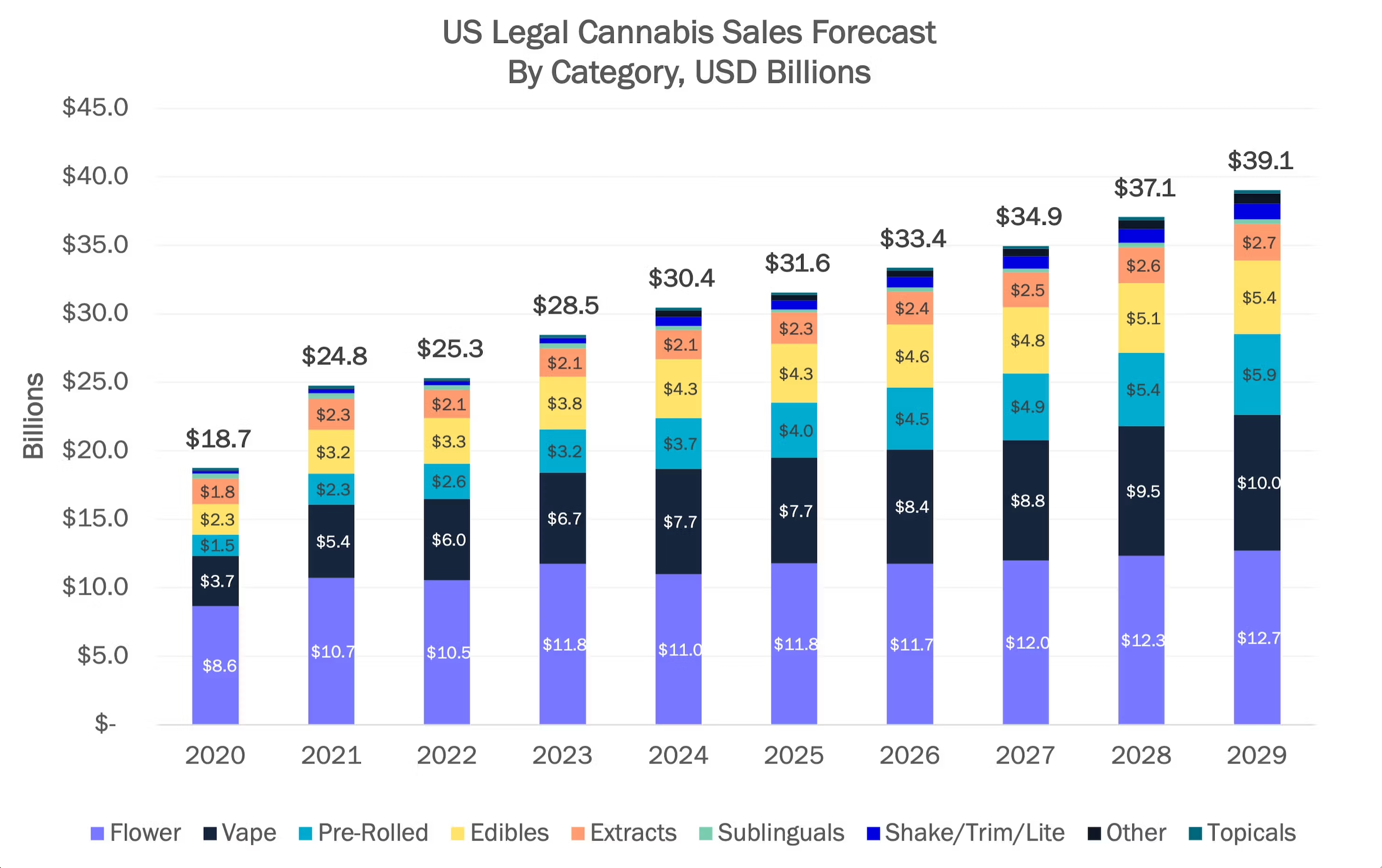
Marijuana remains the #1 detected substance. Positivity has climbed steadily as more states legalize, especially in industries like construction (highest rates), hospitality, retail, and arts/entertainment.
Drug Test Reality Check:
- Standard urine/hair tests detect past use (THC lingers for days or weeks), not current impairment.
- Oral fluid tests are better at spotting recent use but still not perfect.
- Safety-sensitive jobs (trucking, aviation, etc.) follow strict federal DOT rules with zero tolerance.
![Pre-Employment Drug Test: A Complete Guide [2026]](https://iprospectcheck.com/wp-content/uploads/2021/08/employment-drug-screening-service.jpg)


Why Hasn't Corporate America Caught Up?
Employer concerns are valid:
- Liability for workplace accidents
- Insurance and workers’ comp risks
- Federal contractor rules and Drug-Free Workplace Act requirements
But the talent market is pushing change. Many companies (especially in tight labor sectors) have dropped cannabis from pre-employment screening for non-safety roles to attract younger workers. Gen Z and Millennials are more open about cannabis and expect policies to evolve.
Some progressive companies now focus on impairment rather than presence — but reliable, real-time impairment testing tech is still emerging.
The Human Side: Employees Caught in the Middle
Medical users (for anxiety, pain, PTSD, etc.) face particular challenges. Many report using cannabis responsibly off-duty yet still risk their livelihood. Others simply want the same freedoms as alcohol users — enjoy legally on your own time, show up sober.
State variations matter:
- Strong protections in places like California, New York, and New Jersey (with limits).
- Weaker or none in many others.
The Future Outlook
Broader federal rescheduling (medical cannabis moved to Schedule III in 2026, with more hearings ahead) could ease some banking/tax issues and slowly influence workplace norms. As public acceptance grows — and with the legal cannabis industry supporting hundreds of thousands of jobs — pressure will mount for updated policies.
For Workers:
- Know your state’s laws (especially NJ specifics).
- Use responsibly and understand testing windows.
- Consider discussing accommodations if medically prescribed.
For Employers:

- Review policies for relevance in 2026.
- Shift toward impairment-focused approaches where feasible.
- Stay competitive in talent wars by modernizing.
The gap between legalization and workplace reality is shrinking — but slowly. Normalization is coming. In the meantime, millions navigate this gray area every day.
What do you think — should companies treat cannabis more like alcohol? Drop your thoughts in the comments.
What the Paperwork Actually Changes
Rescheduling headlines move markets. They do not automatically fix your local counter, your bank account, or your ability to grow at home. Read the bill text energy, not just the press release. Ask who profits when the suits celebrate.
Patients, Heads, and the Fine Print
Policy always lands unevenly. Veterans, legacy operators, and everyday smokers do not get the same windfall as companies with lobbyists. Track enforcement on the street, not just votes on the Hill.
Stay Fluent Without the Panic
Learn enough law to protect yourself. Skip the doomsday cosplay. Culture survived worse paperwork than this — and it will need clear heads more than hot takes.
One More Pass From the Notebook
We keep revisiting jars, floors, and fits because cannabis culture is not a press release — it is a practice. Come back tomorrow with a clearer nose, a sharper question, and less patience for potency theater. The Stoner Review will still be here, writing like the Wi-Fi might die and the circle outside is the only network that matters.
Support independent cannabis media when the algorithm gets weird. Share the pieces that help somebody shop smarter. And when a brand tries to sand the joke off the plant, remember who was in the room first.
Keep Reading on The Stoner Review
More field notes from the same smoke-stained notebook:
Find more gritty, honest stories, strain reviews, travel guides, and multi-minded stoner perspectives at theStonerReview.com/blog.


