

How to Sex Cannabis Plants: Male vs Female Identification Guide for Growers
Identifying the sex of your cannabis plants early is one of the most critical skills in cultivation. Accurate sexing prevents unwanted pollination, preserves resources, and maximizes resinous bud yields. Here’s the complete breakdown of every method — from basic visual inspection to advanced DNA testing — for both hobbyists and serious cultivators.
Primary Method: Visual Pre-Flower Inspection

The most accessible and widely used approach involves examining pre-flowers at the nodes (junctions where branches meet the main stem). These structures typically emerge during late vegetative stage.
- Timing: 3–6 weeks from germination for photoperiod strains (earlier in some genetics); autoflowers show similar traits on a compressed timeline. Check starting at the 4th–5th node upward.
- Tools: Jeweler’s loupe, macro lens, or high-resolution phone camera for magnification.
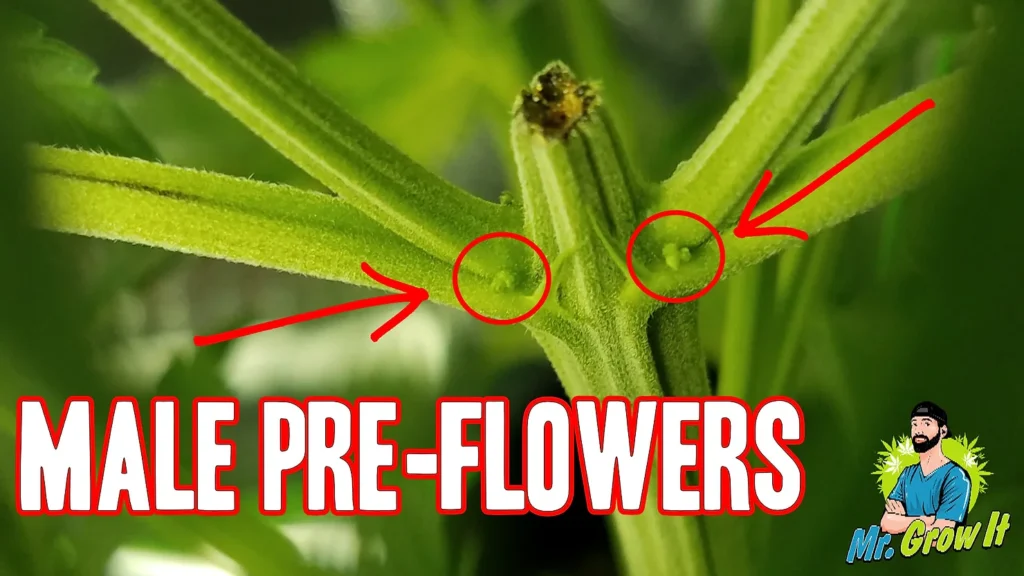
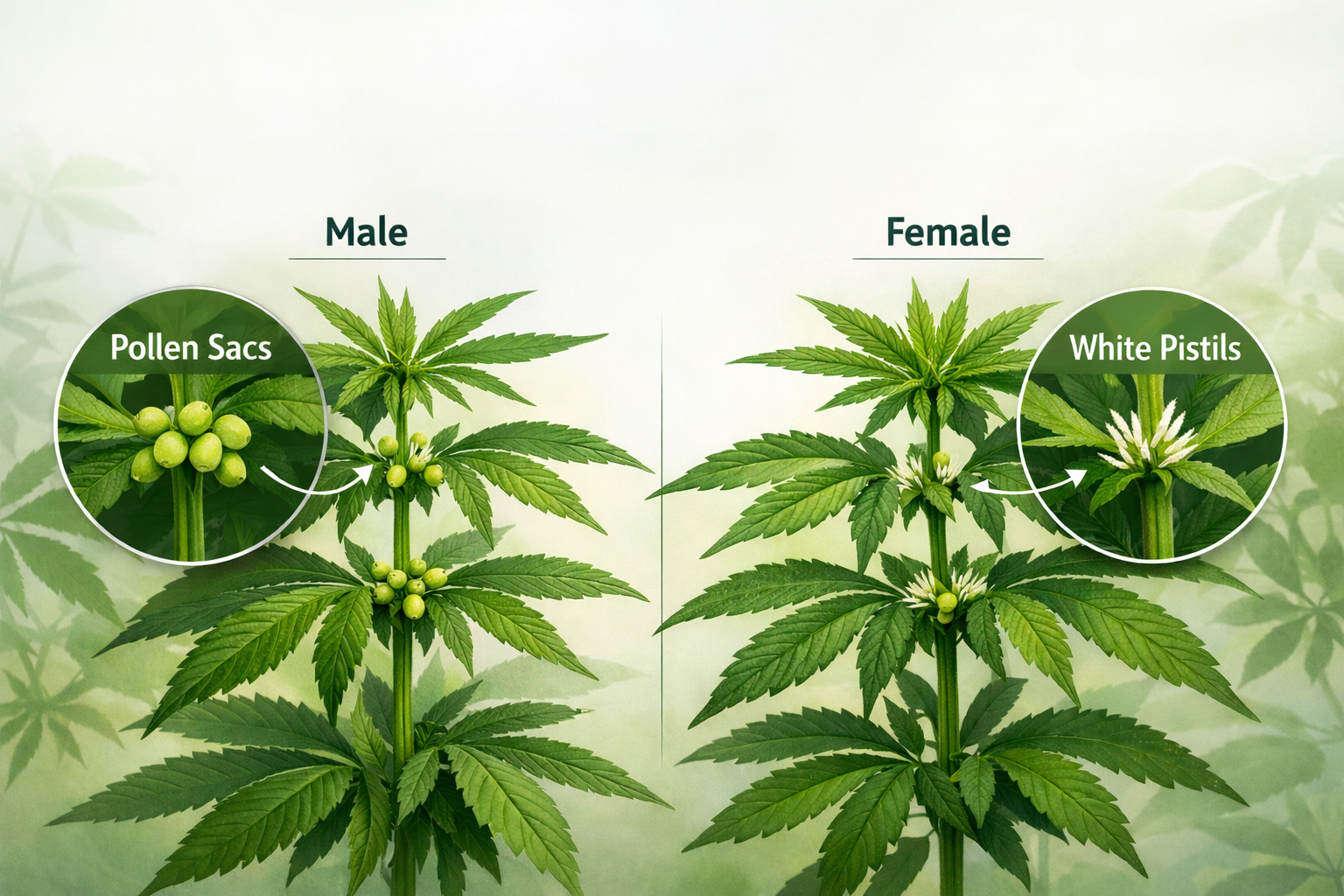
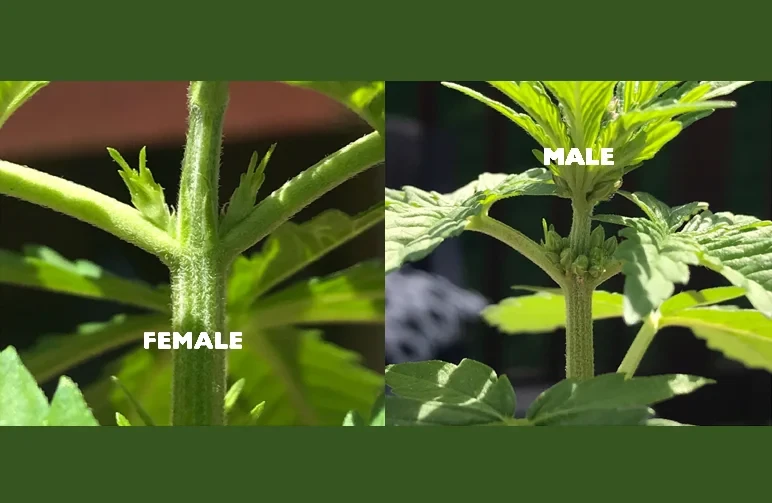
Male pre-flowers: Small, rounded pollen sacs resembling tiny green grapes or balls, often on short stalks (pedicels). They may cluster and develop a spade-like shape. No white hairs.
Female pre-flowers: Teardrop- or pear-shaped calyxes with 1–2 white pistils (stigmas/hairs) emerging in a V-shape. Structures sit flush to the stem.
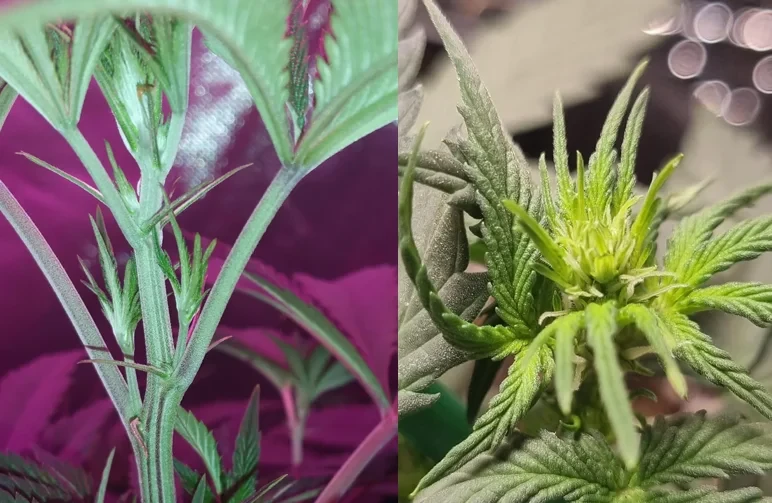
Side-by-side references:
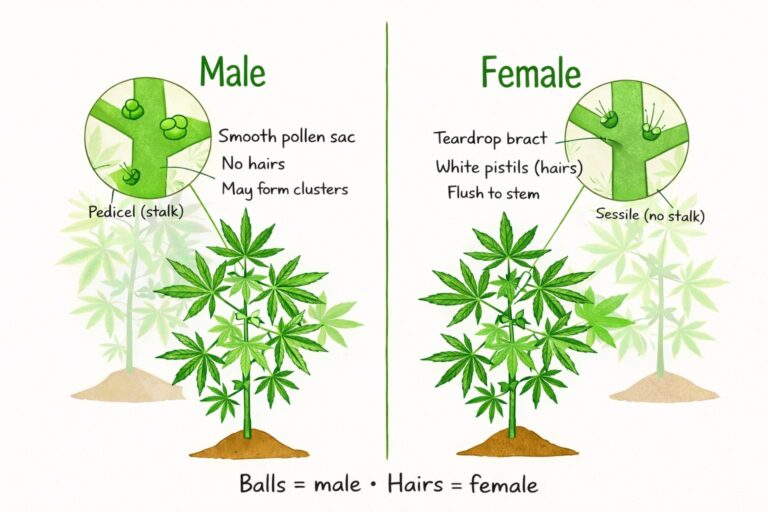

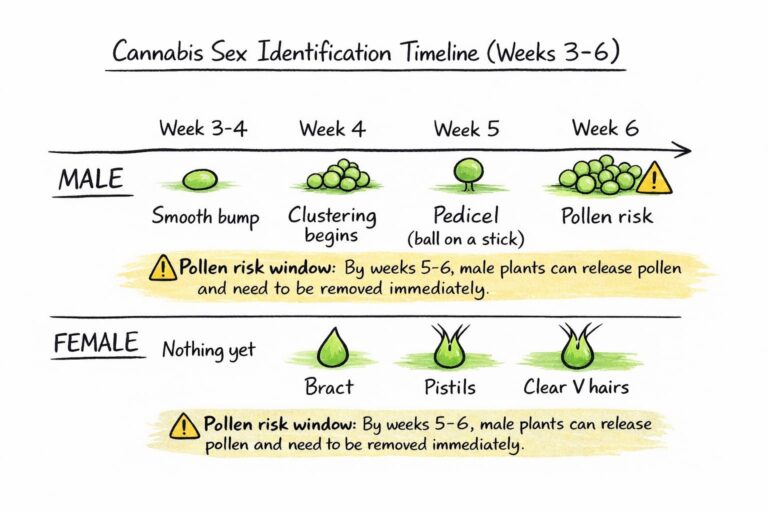
Inspect daily under strong light. Males often grow taller faster with longer internodes; females tend toward bushier profiles.
Supporting Visual and Behavioral Indicators
- Growth patterns: Males stretch more aggressively; females develop denser foliage.
- Stem and node differences: Some report slight variations in stem thickness or resin production, but these are secondary and less reliable than pre-flowers.
- Hermaphrodite checks: Look for mixed traits (pollen sacs near pistils or “bananas” later in flower). Remove immediately to prevent pollination.
Advanced and Alternative Techniques
- Light manipulation for forcing pre-flowers: Switch a branch or small plant section to a 12/12 cycle temporarily (cover with opaque material for 12 hours daily). Pre-flowers may appear within 7–10 days on the treated area without fully committing the whole plant. Revert to vegetative lighting afterward.
- Clone testing: Take cuttings from each plant, root them, and flower the clones under 12/12 while keeping mothers in veg. Sex the clones to identify the parent. Reliable but time- and space-intensive.
- Genetic/DNA testing: Commercial labs analyze tissue samples for sex chromosomes with near-100% accuracy, often within days. Ideal for large-scale or valuable genetics, though costly for small grows.
Feminized seeds or clones from reputable sources minimize the need for sexing by producing predominantly female plants, though rare hermaphroditism remains possible under stress.
Best Practices and Risk Management
- Begin inspections early and remove confirmed males or hermies immediately.
- Maintain stable environments (consistent light, minimal stress) to reduce hermaphroditism.
- Combine methods: Use visuals as primary, with light forcing or clones for confirmation.
- Document observations for future reference — genetics vary in showing speed.
Have current plants showing early signs or specific genetics in play? Drop the details in the comments and we’ll help troubleshoot.
More field-tested grow guides, strain reviews, and culture at theStonerReview.com/blog.
Know Your Plants. Wear the Culture.
The growers who put in the work to identify, isolate, and cultivate deserve gear that matches the craft. Our cannabis streetwear is built for the ones who actually know what they’re doing in the tent.

PETROLEUM DYNAMITE Unisex t-shirt
Cannabis streetwear without the corporate leaf clipart.
Shop Now →Check out the Free the Green Hoodie — for the ones who believe the plant deserves better. Or grab the Pothead Society Classic Tee for the grow room and beyond.
Browse the full collection at The Stoner Review →
Environment Beats Hype Genetics
Fancy seeds will not save a tent with light leaks, wild VPD, or lazy dry-backs. Dial environment first: stable lights-off temps, honest airflow, and a dry that does not rush the plant into hay. Genetics matter — but only after the room stops lying to you.
Document every run. The growers who improve are the ones who write down what actually happened, not what the forum promised.
Harvest Timing Without the Myths
Trichomes tell more truth than calendar apps. Cloudy with a measured amber percentage beats harvesting because you got impatient. Cure is half the product. If you rush jars, you erase months of work in a week.
Keep the Culture in the Garden
Home grow is not just yield math. It is continuity — the same stubborn plant love that existed before delivery apps. Share clones with people who will respect them. Smoke what you grow before you brag about it online.
Keep Reading on The Stoner Review
More field notes from the same smoke-stained notebook:
Find more gritty, honest stories, strain reviews, travel guides, and multi-minded stoner perspectives at theStonerReview.com/blog.


