

Experimental & Legal Cannabis Cultivation in Oaxaca
By Dean Rodriguez · Published · Updated
Share
Experimental & Legal Cannabis Cultivation in Oaxaca
These photos are from recent reports on industrial hemp and medical cannabis projects in Oaxaca.

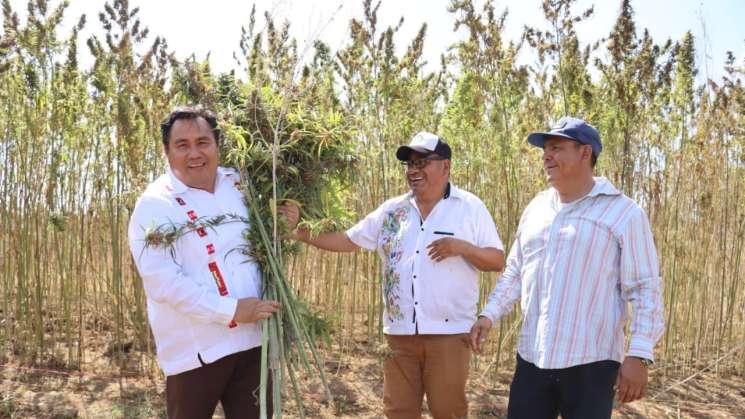
Experimental hemp harvest in Oaxaca

Farmers in Oaxaca have recently begun cultivating cannabis and hemp for industrial uses like textiles, oils, soap, and sustainable materials. Several indigenous farming cooperatives are involved in these projects.
Traditional Cannabis Fields in Sinaloa
These are photos of large outdoor cannabis plantations discovered in mountainous regions of Sinaloa — historically one of Mexico’s major cannabis-producing areas.
Cannabis plantations in Sinaloa


These massive outdoor grows are typically located in remote mountain regions where cannabis has historically been cultivated for decades.
Why Mexico Is Naturally Suited for Cannabis Farming
Mexico has several advantages that cannabis experts frequently mention:
- Long outdoor growing seasons
- Strong sunlight
- Fertile mountain soil
- Lower labor costs
- Historic landrace genetics from regions like Oaxaca
Some indigenous growers in Oaxaca are also trying to preserve old-school Mexican cannabis genetics that many breeders consider historically important.
Cannabis Culture in Oaxaca
Modern cannabis culture in Oaxaca is becoming more open as legal reforms slowly evolve.
Cannabis clubs and grow spaces in Oaxaca
One recent report described cannabis clubs in Oaxaca that include educational grow spaces, cultivation classes, and exhibits about traditional Mexican cannabis history.
Mexico’s Green Revolution: The Long Fight to Legalize Cannabis
For generations, cannabis in Mexico has lived in the shadows.
It grew quietly in the mountains of Sinaloa, Oaxaca, Guerrero, and Chihuahua while politicians condemned it publicly and criminal organizations profited privately. Farmers risked prison to cultivate a plant that much of the world is now rapidly legalizing and monetizing.
Mexico helped shape global cannabis culture, yet it remains trapped between old drug-war politics and the realities of a modern cannabis economy.
And that contradiction may be costing the country billions.
A Plant That Built Empires — and Destroyed Lives
For decades, cannabis trafficking generated enormous profits for criminal organizations operating throughout Mexico.
As demand exploded in the United States during the 1970s, 80s, and 90s, massive cannabis plantations spread across remote mountain regions. Entire rural communities became economically dependent on marijuana cultivation because few other industries offered survival-level income.
The irony was brutal:
The same governments fighting cannabis often provided farmers with no realistic alternative.
In many villages, growing cannabis wasn’t rebellion.
It was survival.
America Legalized While Mexico Hesitated
Then something unexpected happened.
America — the country that fueled the drug war for decades — began legalizing cannabis state by state.
California. Colorado. Michigan. New York.
Suddenly, legal dispensaries sold premium flower in brightly lit stores while Mexico still criminalized much of the same activity.
That shift devastated parts of the illegal marijuana trade. American consumers increasingly preferred lab-tested dispensary cannabis over compressed black-market imports. Cartel profits from cannabis reportedly declined as legal American production expanded.
But Mexico never fully capitalized on the moment.
Despite Mexico’s Supreme Court ruling recreational prohibition unconstitutional in 2021, lawmakers still have not finalized a complete national legal framework for commercial cannabis sales.
The result is uncertainty.
Farmers remain in limbo.
Investors hesitate.
And organized crime still controls parts of the market.
The Farmers of Oaxaca See a Different Future
In Oaxaca, a new generation of growers sees cannabis differently.
Not as contraband.
As opportunity.
Some experimental cultivation projects now focus on hemp, CBD production, sustainable textiles, cosmetics, medicinal products, and agricultural innovation. Indigenous farming cooperatives have started exploring legal cultivation pathways that could transform struggling rural economies.
For many communities, legalization represents more than cannabis.
It represents independence.
The ability to move from surviving underground to participating openly in a legal economy.
Why Mexico Could Become a Cannabis Superpower
Few countries on Earth are naturally positioned for cannabis cultivation like Mexico.
The advantages are enormous:
- Long outdoor growing seasons
- Rich mountain soil
- Intense sunlight
- Lower production costs
- Historic cannabis genetics known worldwide
American cannabis companies spend enormous amounts of money recreating indoor conditions that nature already provides in parts of Mexico.

If fully legalized and regulated, Mexico could potentially become one of the largest outdoor cannabis producers in the world.
Not only for recreational flower, but for:
- Medical cannabis
- Hemp fiber
- CBD products
- Bioplastics
- Textiles
- Wellness products
- Pharmaceutical research
And unlike the illegal market, a regulated industry generates taxes, jobs, testing standards, and transparency.

Legalization Could Hurt Cartels More Than Prohibition Ever Did
For years, governments tried to eliminate cannabis through raids, arrests, and military operations.
But prohibition often strengthened the black market by keeping prices high and pushing production underground.
Legalization changes that equation.
When farmers can grow legally, when products are tested, taxed, and sold openly, criminal organizations lose control over a major revenue stream.
America’s legal cannabis industry already demonstrated that consumers overwhelmingly prefer safer, regulated products when available.
Mexico now faces a historic choice:
Continue fighting a decades-old war that never truly ended —
Or build a legal industry that creates jobs instead of prisoners.
The Real Question Is No Longer “If”
The global cannabis industry is already here.
Canada legalized federally.
Germany expanded legalization.
More American states continue opening recreational markets.
Mexico can either lead this new agricultural economy —
Or watch other countries profit from a plant deeply tied to its own history.
The real question is no longer whether cannabis legalization is coming to Mexico.
The real question is who will benefit when it finally arrives.
The cartels?
Or the farmers who have waited generations to grow freely in the sunlight?
Keep Reading on The Stoner Review
More field notes from the same smoke-stained notebook:
Find more gritty, honest stories, strain reviews, travel guides, and multi-minded stoner perspectives at theStonerReview.com/blog.


