
How to Make Feminized Cannabis Seeds: STS, Colloidal Silver & Rodelization Explained
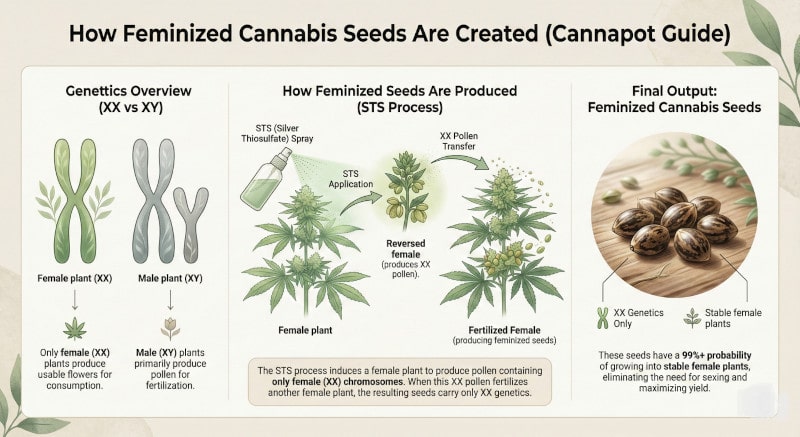
Feminization techniques enable breeders to produce seeds that yield predominantly female plants — ensuring high resin production without the risk of pollination from males. These methods reverse a genetically female (XX) plant to develop male pollen sacs, which then fertilize another female, resulting in seeds that carry only female genetics.
Here’s the complete breakdown of every technique, with step-by-step protocols, a comparison table, and what to watch out for.
The Underlying Science
Cannabis sex expression is influenced by ethylene, a plant hormone that promotes female flower development. Feminization techniques suppress ethylene production or signaling, prompting female plants to express male traits and produce viable pollen carrying only X chromosomes. When this pollen fertilizes a separate female, the resulting seeds are feminized (typically 95–99%+ female in stable lines). Chemical induction consistently outperforms natural stress methods in reliability and pollen yield.
Primary Feminization Techniques
Three methods dominate: silver thiosulfate (STS), colloidal silver, and rodelization. Gibberellic acid (GA3) is occasionally tested but shows low efficacy.
1. Silver Thiosulfate (STS) – The Professional Standard
STS is widely regarded as the most reliable for commercial and serious home breeding due to high pollen production and fewer applications required. It combines silver nitrate and sodium thiosulfate to block ethylene.
Step-by-Step Preparation (Small Batch):
- Stock A: Dissolve 0.5g silver nitrate in 500ml distilled water (store in dark bottle).
- Stock B: Dissolve 2.5g sodium thiosulfate (anhydrous) in 500ml distilled water.
- Mixing: Slowly add Stock A to Stock B (1:4 ratio by volume) while stirring — never reverse. Dilute as needed for 0.02–0.03 M working solution. Store in amber spray bottle away from light.
Application: Spray selected female plants (early flowering, around switch to 12/12 or pre-flower stage) until runoff, 1–3 times at 5–7 day intervals. Focus on nodes and flowering sites. Isolate the reversed plant for pollen collection.
2. Colloidal Silver – Accessible Home Method
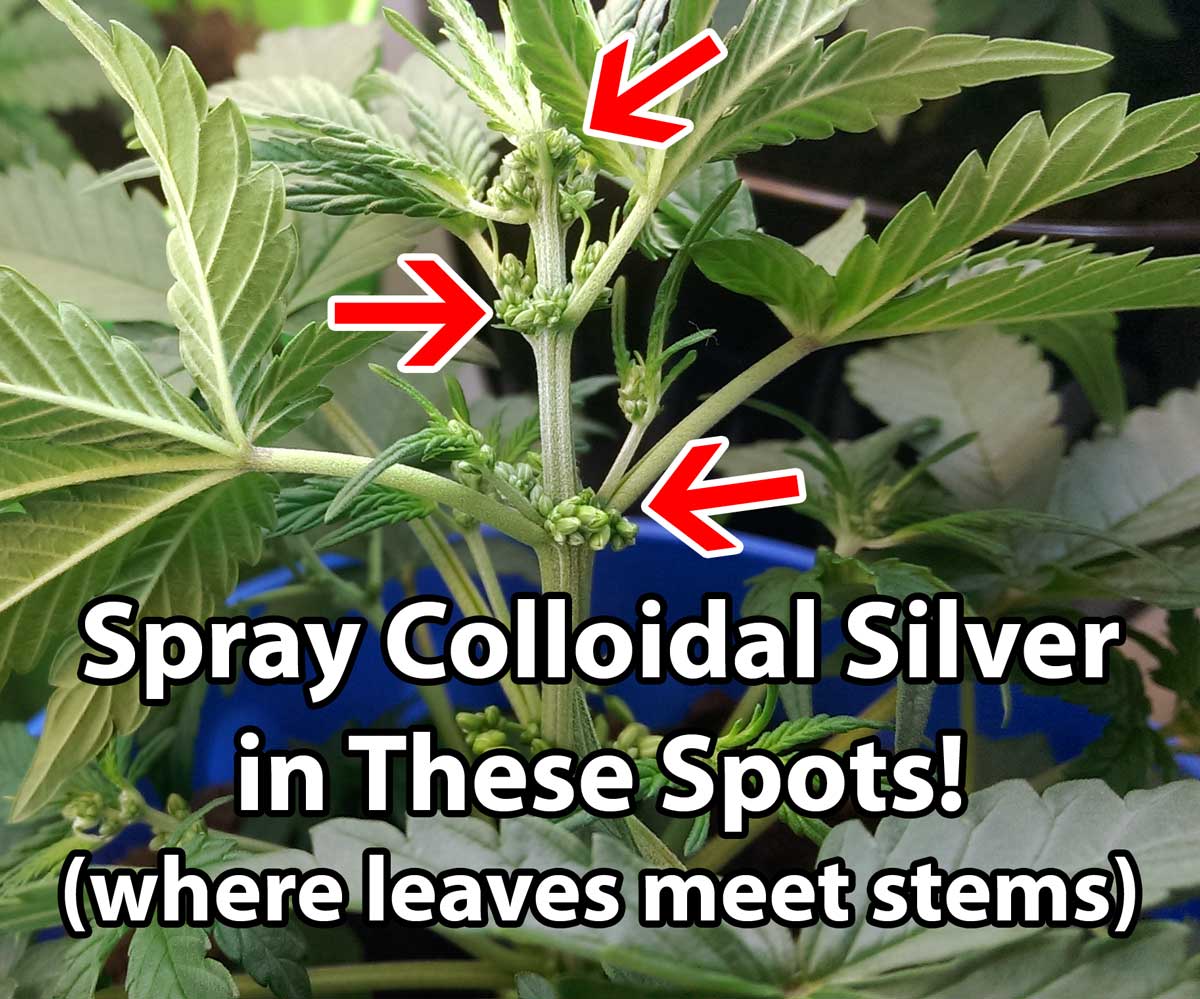
A suspension of silver particles (30–100 ppm) sprayed daily inhibits ethylene similarly to STS but requires more consistent application. Easier to source or make via electrolysis (pure silver wires + 12V battery in distilled water).
Protocol: Spray nodes and emerging flowers daily for 10–14 days starting in early bloom. Continue until pollen sacs mature. Less phytotoxic than STS in some lines but more labor-intensive.

3. Rodelization (Stress-Induced) – Natural but Least Reliable
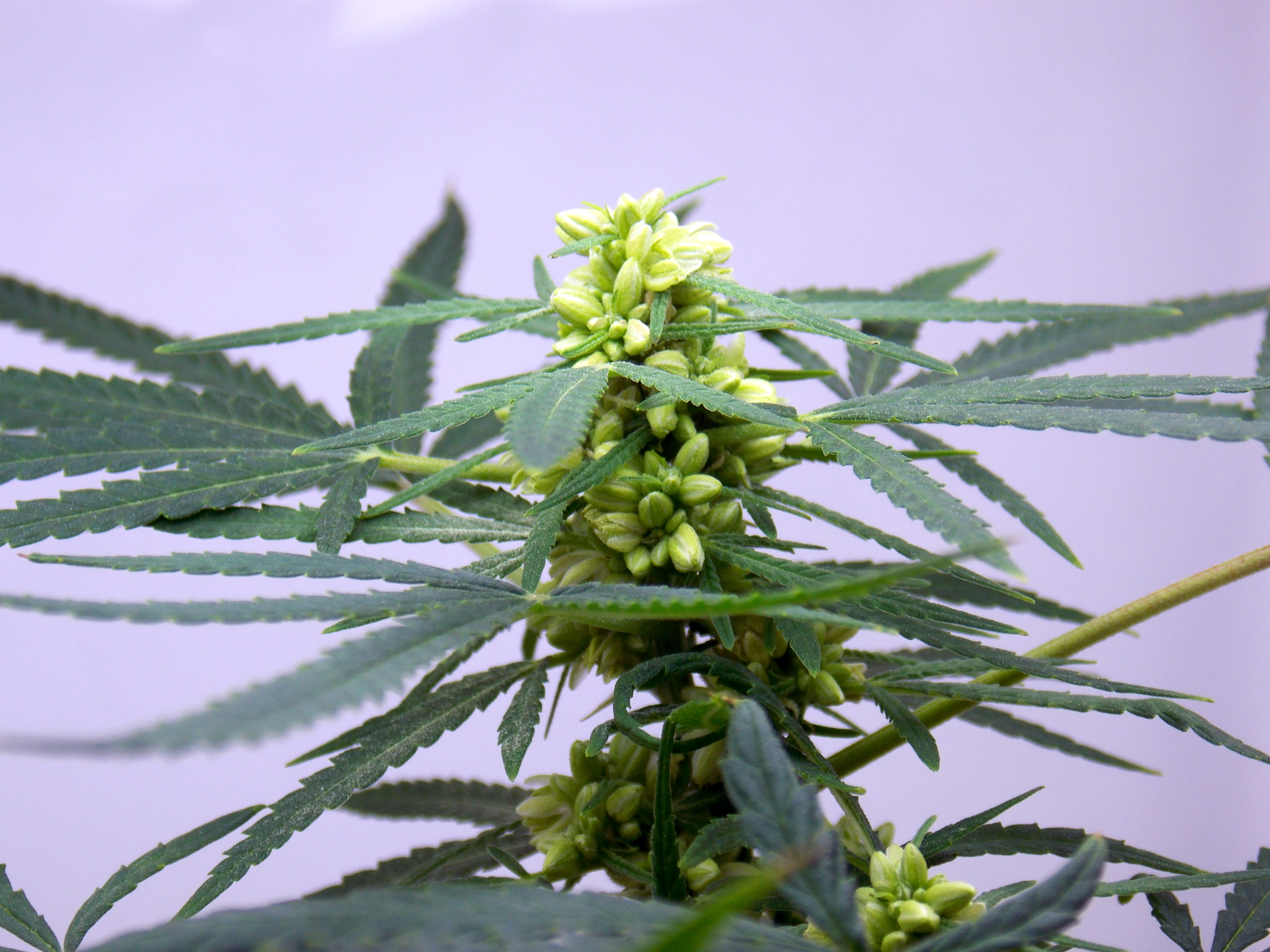
Extend flowering 2–4 weeks beyond normal harvest on a vigorous female. Prolonged stress can trigger “nanners” (banana-shaped anthers) that produce pollen. Collect and use immediately. Low pollen volume and higher risk of unstable genetics — not recommended for serious breeding projects.

Technique Comparison:
| Technique | Reliability | Applications | Difficulty | Key Risks | Best For |
|---|---|---|---|---|---|
| STS | Highest | 1–3 | Moderate | Chemical handling; phytotoxicity if overdosed | Professional breeding |
| Colloidal Silver | High | Daily (10–14 days) | Low | Residue buildup; more labor | Home growers |
| Rodelization | Low | None (stress only) | Low | Minimal pollen; hermie traits | Experimental only |

Practical Considerations, Safety & Risks
Select stable, high-performing female genetics first — poor mothers pass instability. Apply treatments in veg or early flower for best results; isolate reversed plants to prevent accidental pollination. Collect pollen in a dry, cool environment and store refrigerated for short-term use.
Safety: Wear gloves, goggles, and work in ventilated areas. STS and silver solutions are not for consumption — avoid spraying near harvest or roots. Dispose of runoff responsibly.
Risks: Even successful feminization can introduce hermaphroditic tendencies if genetics are stressed or unstable. Progeny from self-pollinated reversals may show inbreeding depression. Modern professional lines minimize these issues through rigorous selection.
Planning a reversal project or have specific genetics in mind? Drop the details in the comments and we’ll help tailor the protocol.
More field-tested grow guides, strain reviews, and culture at theStonerReview.com/blog.
Grow the Plant. Wear the Culture.
The breeders who put in the work to develop stable genetics deserve gear that matches the craft. Our cannabis streetwear is built for the ones who actually know what they’re doing in the tent.
Check out the Free the Green Hoodie — for the ones who believe the plant deserves better. Or grab the Pothead Society Classic Tee for the grow room and beyond.


