
Is there a link between cannabis usage and Dementia?
No clear causal link exists between general cannabis use and increased dementia risk, according to the strongest recent evidence (2026). Large observational studies and genetic analyses find that cannabis use in older adults is not associated with faster cognitive decline or higher dementia rates.
Key Recent Evidence
- 2026 Oxford-led study (large UK/US cohorts + Mendelian randomization for causality): Cannabis users showed modestly better baseline cognitive scores in some areas (e.g., memory, fluid intelligence), but no link to longitudinal cognitive decline or dementia risk. Genetic evidence supported no causal relationship.
- Authors noted this does not mean cannabis is risk-free — other health effects exist, and heavy/long-term use needs more study.

Cannabis and brain interaction illustration — Research explores both potential risks and neuroprotective effects.
Areas of Concern or Mixed Findings
- Heavy/problematic use: A 2025 Canadian study of millions found that people with emergency room visits or hospitalizations due to cannabis had a 23% higher dementia risk (vs. other hospital visits) and 72% higher vs. the general population within 5 years. This likely reflects heavy use, cannabis use disorder, or related factors rather than casual use.
- Adolescent/young adult heavy use: Linked to slower cognitive development, altered brain structure (e.g., hippocampus), and potential long-term deficits in memory/working memory.
- Midlife long-term heavy use: Older studies (e.g., 2022) noted IQ declines and smaller hippocampal volume — risk factors for dementia — but recent data in older adults doesn't show progression to dementia.
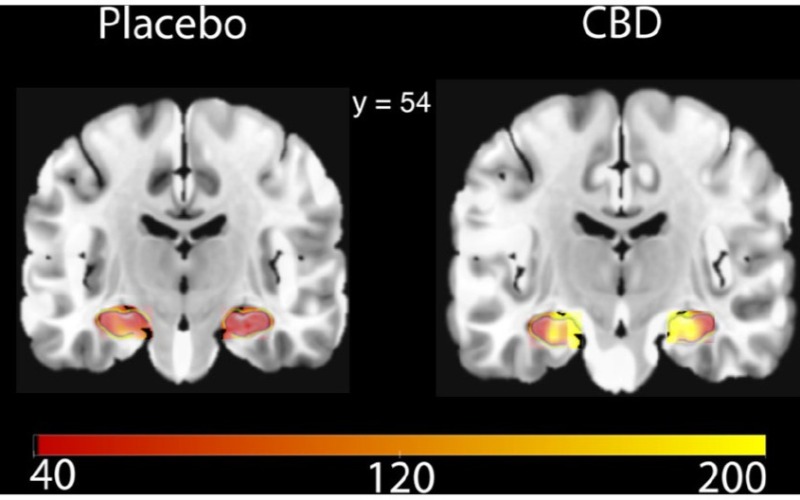
Brain imaging example showing CBD effects on hippocampal blood flow (research area for potential benefits).
Potential Benefits and Therapeutic Use
Cannabinoids (especially CBD and low-dose THC) are being studied for symptom relief in existing dementia, such as agitation, aggression, and neuropsychiatric symptoms. Some preclinical work suggests anti-inflammatory and neuroprotective effects that could slow aspects of Alzheimer's pathology.
Clinical trials show mixed but promising results for behavioral symptoms, with generally good safety in older patients. This is treatment for symptoms, not prevention or cure.

Older adult consulting on medical cannabis — Use among seniors has risen, often for pain, sleep, or symptom management.
Bottom Line for Most People
- Moderate or occasional use in adults/older adults → Current best evidence: No substantial increase in dementia risk.
- Heavy, daily, or starting-young use → More potential for cognitive impacts; caution advised.
- Factors like dosage, THC vs. CBD ratio, method (smoking/vaping/edibles), genetics, and overall health matter enormously.
Always consult a doctor, especially if you have cognitive concerns or take other medications — interactions exist. Research is ongoing, and results can shift with better studies on specific strains, doses, and populations.


