

Munchies: The Real Deal Bolognese Ragù from Scratch No jarred sauce. No shortcuts that matter. Just hours of low-and-slow magic that turns a handful of humble ingredients into something that will ruin you for anything else.
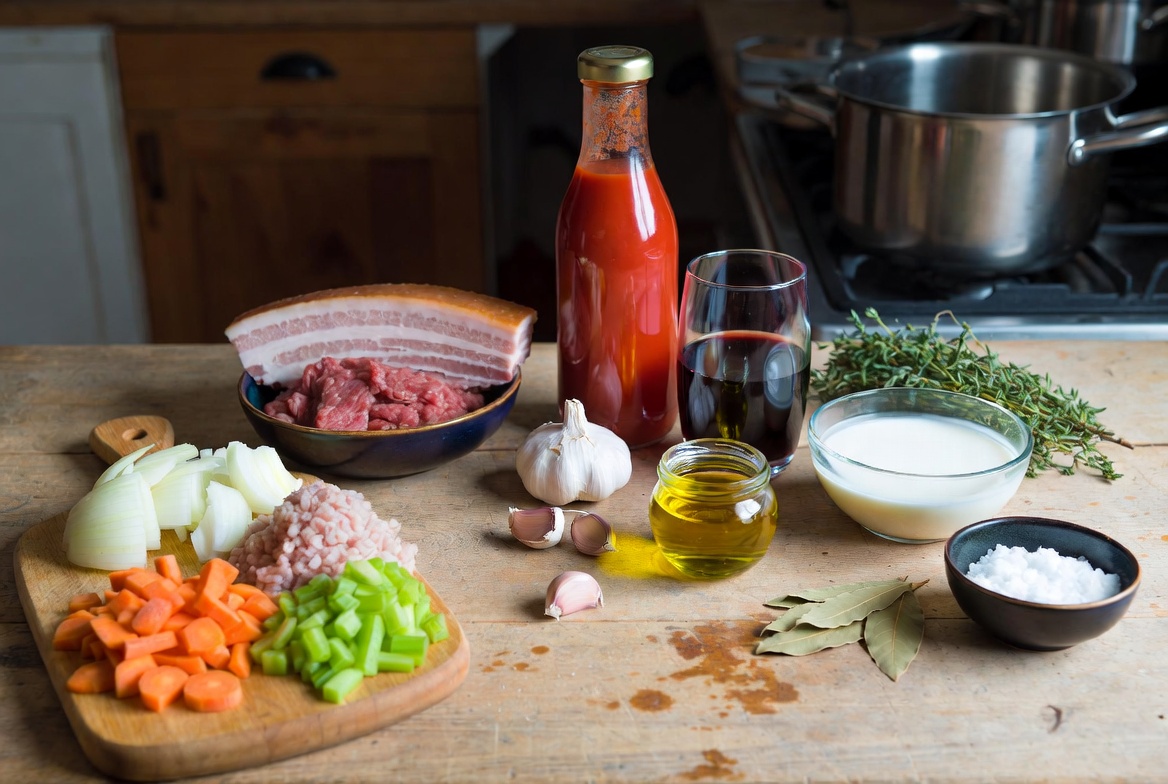

Munchies: The Real Deal Bolognese Ragù from Scratch No jarred sauce. No shortcuts that matter. Just hours of low-and-slow magic that turns a handful of humble ingredients into something that will ruin you for anything else.
Welcome to the first edition of Munchies — our new segment where we get our hands dirty in the kitchen the same way we do with everything else around here. Honest food. Real process. The kind of meals that hit different after a session, on a lazy Sunday, or when you just need something that tastes like it took actual care.
Bolognese isn’t fast food. It’s not the sweet, loose meat sauce most of us grew up dumping on spaghetti. Proper ragù alla bolognese is a slow-cooked meat stew from Bologna, Italy — rich, deep, savory, with layers that only time can build. The meat stays tender, the sauce clings to pasta like it was made for it, and the whole house smells like you’ve been cooking for days (even if most of it was hands-off).
This version is authentic in spirit but practical for home cooks. It takes about 4–5 hours total, with most of that being low simmering. Perfect for starting while you handle other business, then coming back to something legendary.
Serves: 6–8 hungry people (or 4 with serious leftovers) Prep time: 30–40 minutes Cook time: 3½–4+ hours simmering
Ingredients
- 2–3 Tbsp good olive oil
- 4 oz (110–120g) pancetta or guanciale, finely diced (thick-cut bacon works in a pinch)
- 1 large yellow onion, finely diced
- 2 medium carrots, finely diced
- 2 celery stalks, finely diced
- 4 garlic cloves, minced (traditionalists sometimes skip or go light — we’re going light but present)
- 1 lb (450g) ground beef (80/20 or 85/15)
- 1 lb (450g) ground pork
- 1 cup (240ml) dry red wine (Chianti, Sangiovese, or a solid table red)
- 1 cup (240ml) whole milk
- 1 (28 oz / 800g) can San Marzano tomatoes, crushed by hand, or good passata
- 2–3 Tbsp tomato paste
- 2 bay leaves
- 1 small sprig fresh thyme or rosemary (optional but nice)
- Kosher salt & freshly ground black pepper
- Pinch of freshly grated nutmeg (optional, traditional touch)
- Freshly grated Parmigiano-Reggiano for serving
- Pasta: tagliatelle or pappardelle is classic; good rigatoni or spaghetti works too
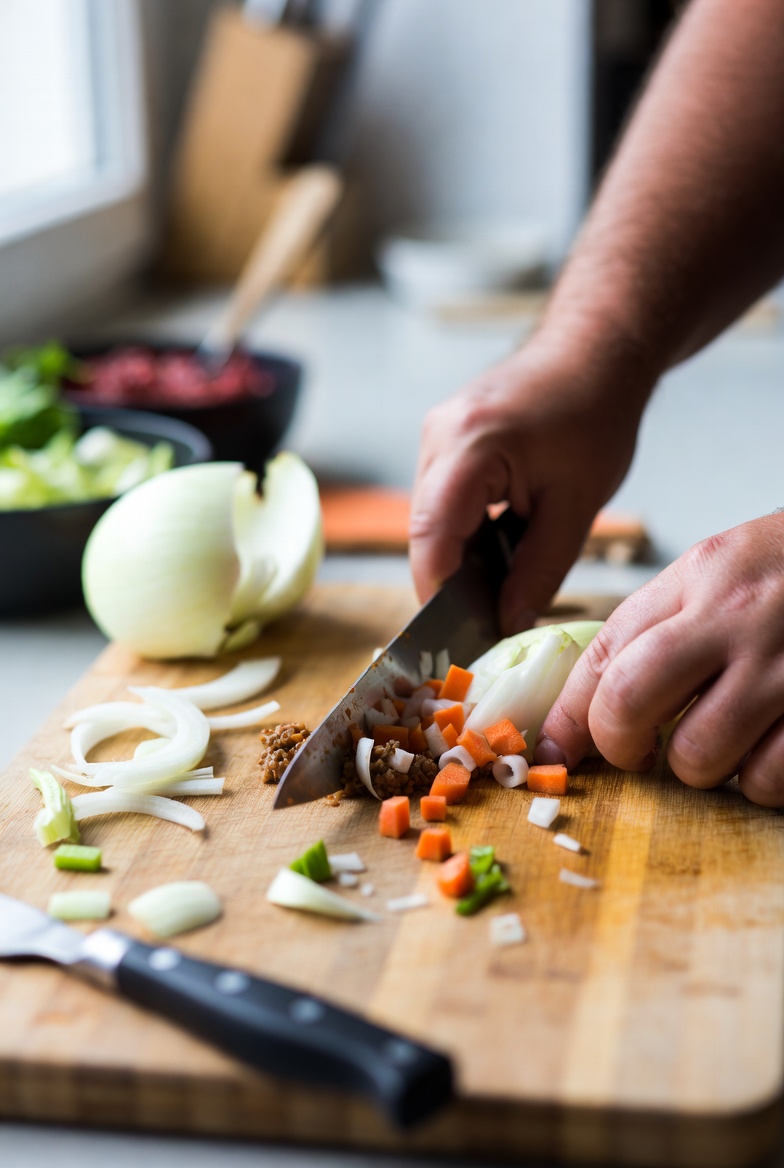
Step 1: Mise en Place & Build the Soffritto Base
Get everything prepped before you start cooking. This is the foundation — don’t rush it.
Finely dice the onion, carrots, and celery (the holy trinity of Italian cooking, called soffritto). The pieces should be small and uniform so they melt into the sauce. Mince the garlic. Dice the pancetta.
Real talk: The finer you chop the vegetables, the better they disappear into the sauce while still giving it body and sweetness. This step is where a lot of flavor lives.
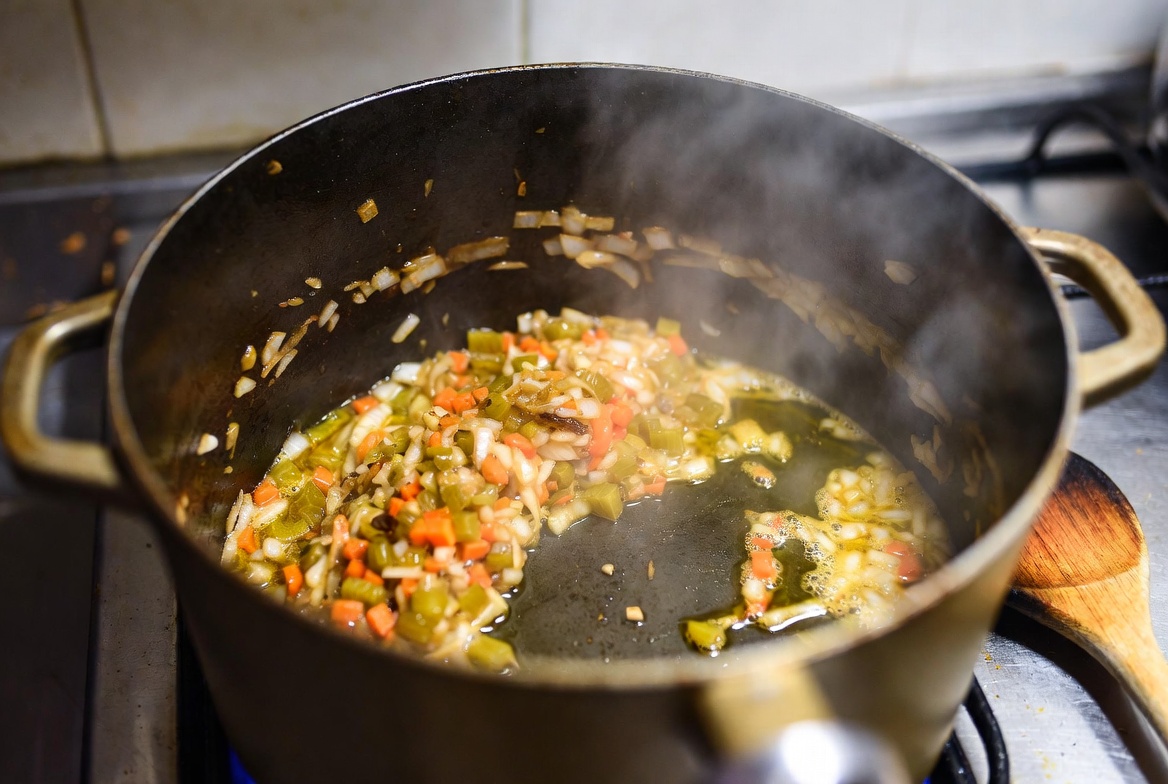
Step 2: Render the Pancetta & Cook the Soffritto
Heat the olive oil in a large, heavy-bottomed pot or Dutch oven over medium heat. Add the pancetta and cook, stirring, until it renders fat and starts to crisp — about 5–7 minutes.
Add the diced onion, carrot, and celery. Season lightly with salt. Cook, stirring occasionally, for 8–12 minutes until the vegetables are very soft, translucent, and just starting to turn golden at the edges. Don’t let them brown hard — you want them sweet and jammy.
Add the minced garlic and cook 1 minute more until fragrant.
Pro move: If anything starts sticking or browning too fast, lower the heat and add a splash of water or wine to deglaze.
Step 3: Brown the Meat
Add the ground beef and pork to the pot. Break it up well with a wooden spoon. Cook over medium-high heat, stirring and scraping the bottom, until the meat is no longer pink and has developed some good browned bits (fond) on the bottom of the pot. This takes 8–12 minutes. Don’t rush — browning = flavor.
Season generously with salt and pepper.
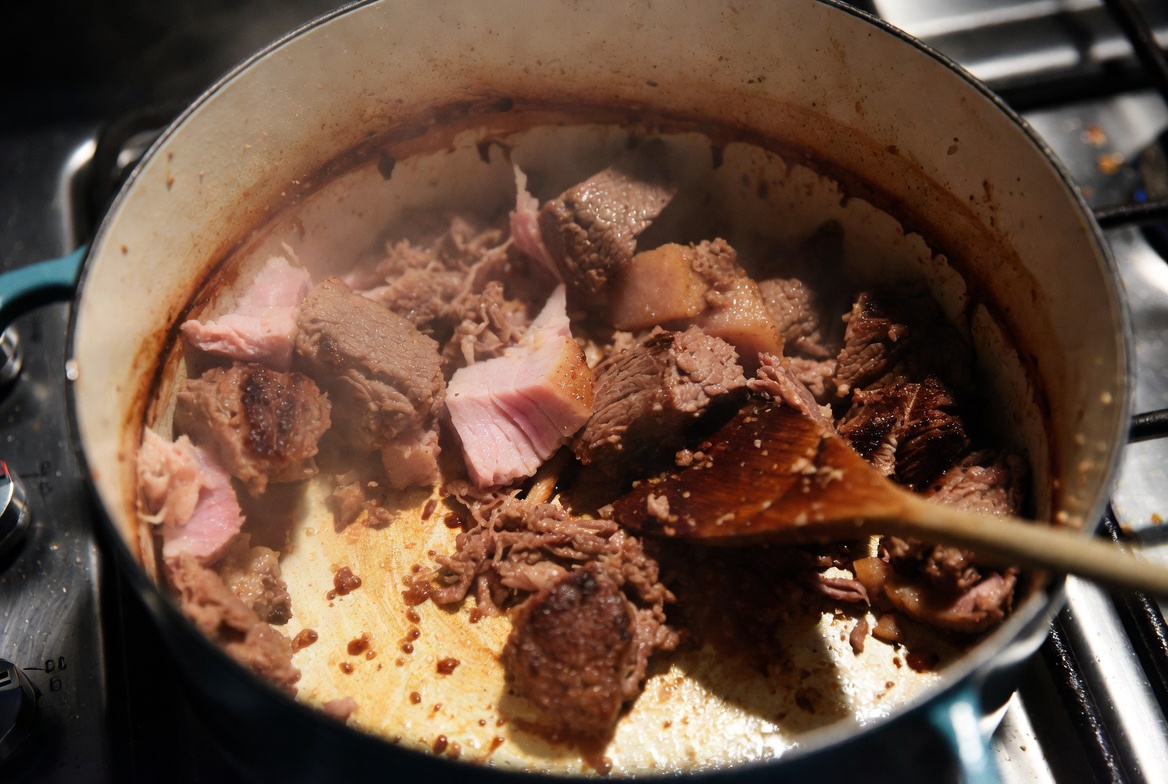
Step 4: Deglaze with Wine
Pour in the red wine. It will bubble and steam hard. Use your spoon to scrape up all the browned bits from the bottom — that’s pure gold. Let the wine reduce by about half (3–5 minutes). The harsh alcohol cooks off and leaves behind deep, fruity notes.
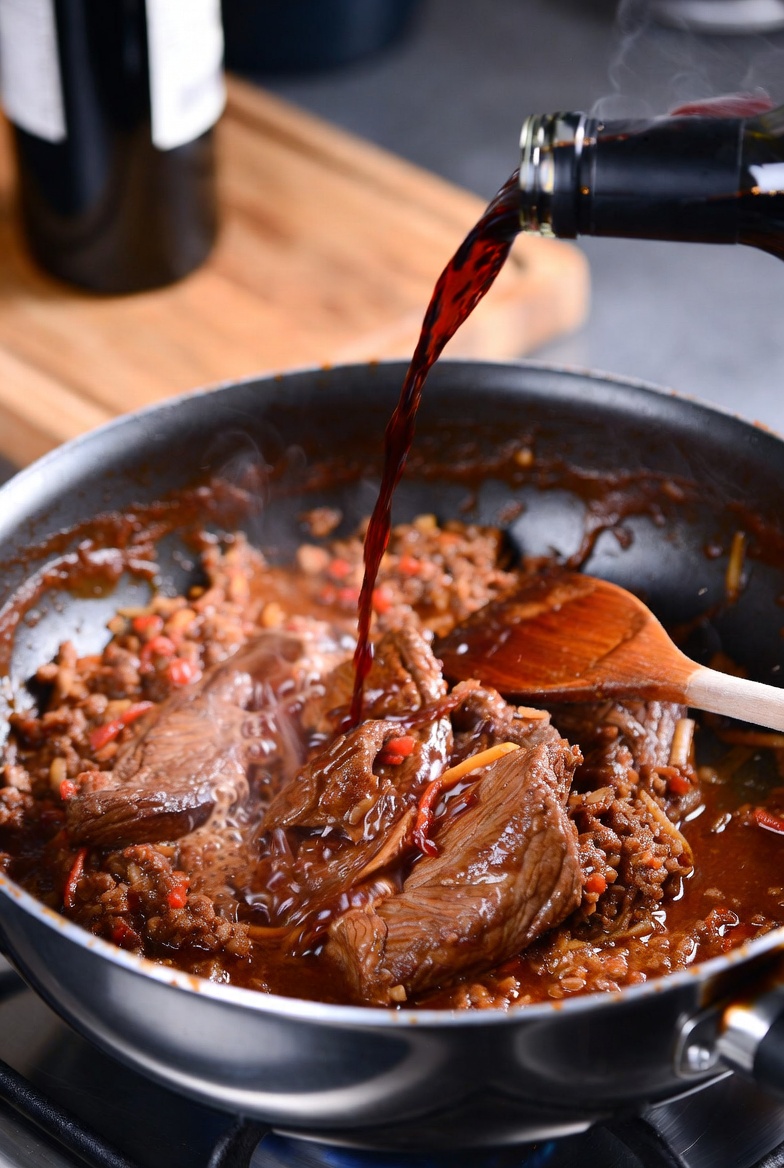
Step 5: Add Tomatoes, Milk & Simmer Low & Slow
Stir in the tomato paste and cook 1–2 minutes. Add the crushed San Marzano tomatoes (with their juice), milk, bay leaves, thyme/rosemary if using, and a pinch of nutmeg if you’re feeling it.
Bring everything to a gentle simmer, then reduce heat to the lowest possible setting — just a bare bubble or two every few seconds. Partially cover the pot (leave a crack for steam to escape).
Now walk away. Seriously.
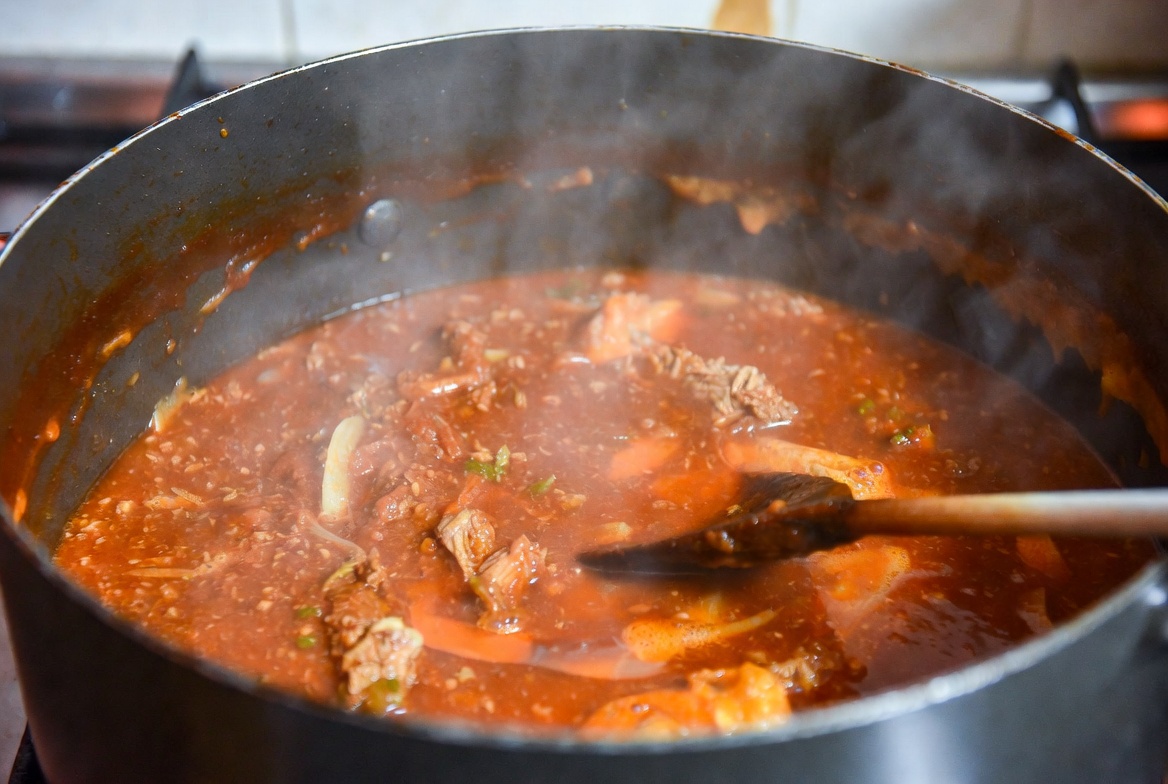
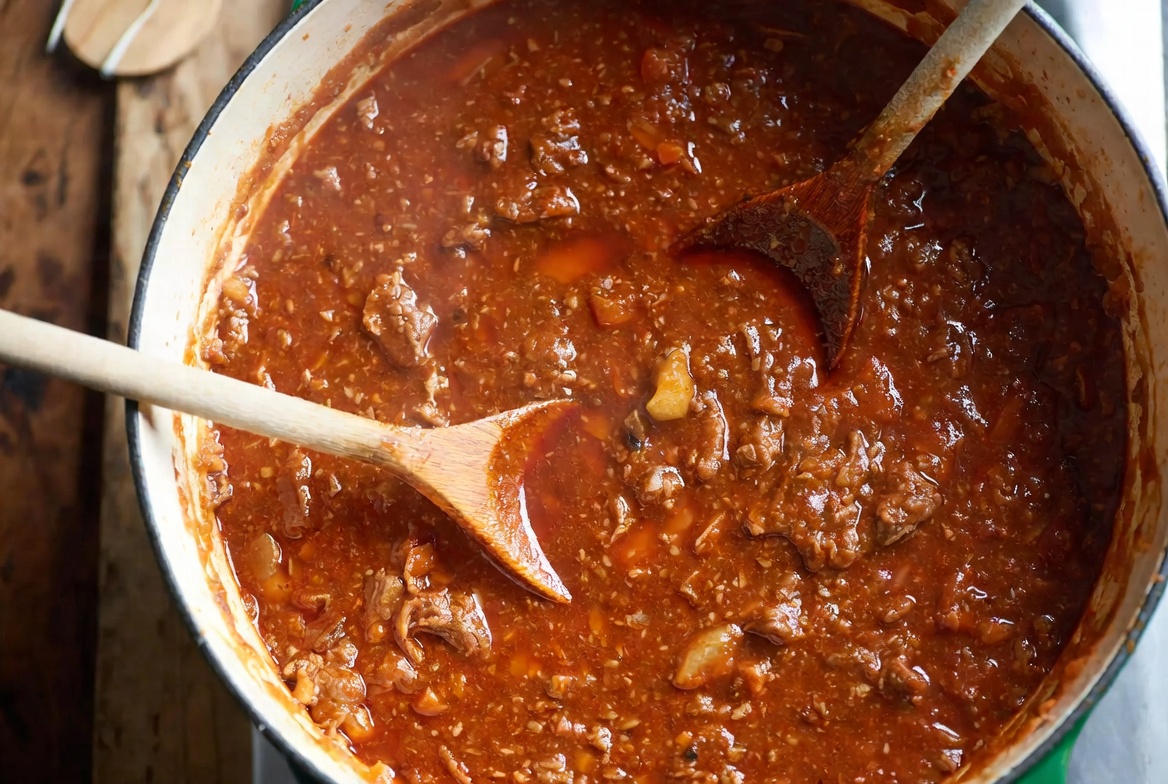
Simmer for at least 3½–4 hours, stirring every 30–45 minutes. If it gets too thick or starts sticking, add a splash of water, stock, or more milk. The sauce should be thick, glossy, and rich — not watery, not dry. The milk tenderizes the meat and adds a subtle creamy depth that’s signature to real Bolognese. The long cook breaks everything down into something transcendent.
Taste near the end and adjust salt, pepper, or add a little more wine/milk if needed. Remove bay leaves and herb stems.

Step 6: Finish & Serve
While the sauce finishes, cook your pasta in well-salted water until just al dente. Reserve a cup of pasta water.
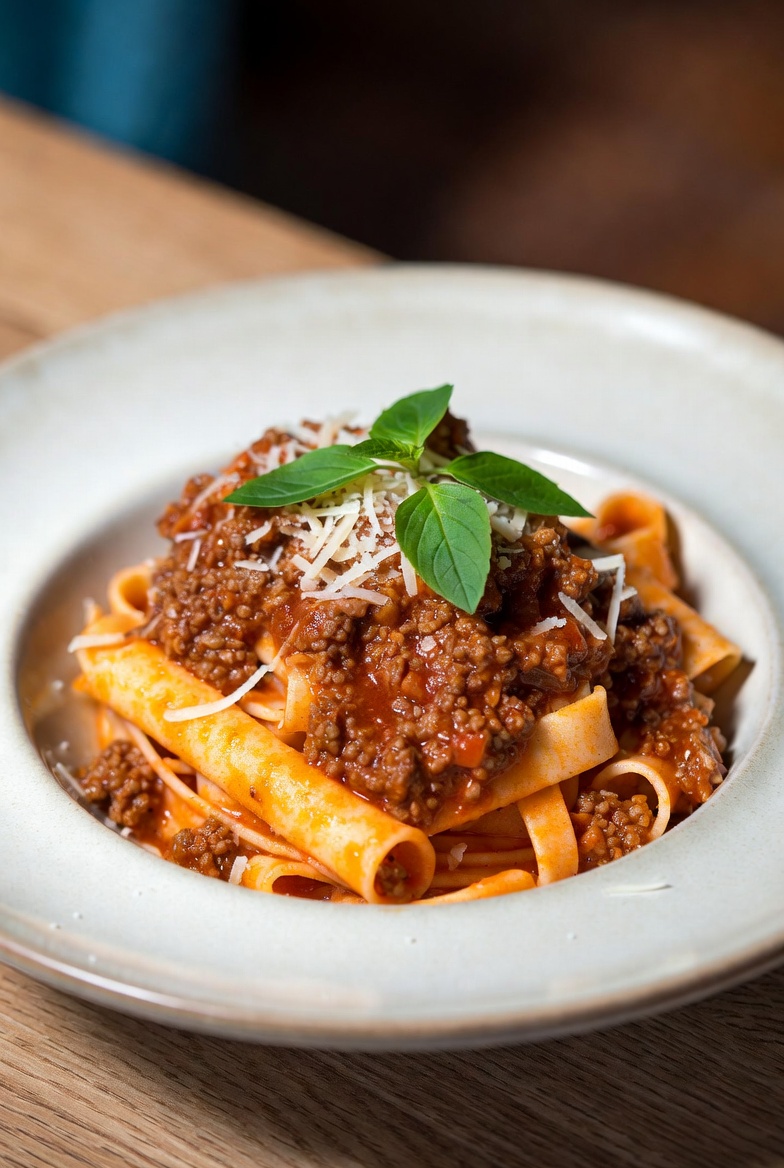
Toss the drained pasta directly into the pot of ragù (or a pan with some sauce) over low heat, adding a splash of pasta water to help it emulsify and cling. Stir gently until every strand or tube is coated.
Plate generously. Shower with freshly grated Parmigiano-Reggiano. A few cracks of black pepper or a tiny pinch of chili flakes if you like heat. Fresh basil or parsley is optional but pretty.
Honest Tips from the Trenches
- Don’t rush the simmer. This is not a 45-minute sauce. The magic happens in the long, slow reduction. Plan accordingly.
- Meat ratio: Half beef, half pork is classic and balanced. You can do all beef or add a little veal if you’re feeling fancy.
- Make it ahead: Bolognese is better the next day. It freezes beautifully for 2–3 months. Portion it out.
- Leftovers game: Cold ragù on toast or straight from the container at 2 a.m. is elite munchie behavior.
- Vegetarian version (for the homies): Swap meat for finely chopped mushrooms + lentils or plant-based ground. Still do the long simmer — it works.
- Pasta choice: Tagliatelle or pappardelle catches the sauce best. Rigatoni is great too. Spaghetti is fine but more American.
This is the kind of meal that makes you feel like you actually did something with your day. It rewards patience the same way growing does — you put in the time up front and get something way better than anything you can buy.
Make a big batch. Share it with people you like. Freeze the rest for when the munchies hit and you want real food without the effort.
This is Munchies. More recipes coming — the ones that actually slap after a good smoke or a long day.
If you make this, tag us or drop a photo. We want to see that sauce. And when you’re repping the lifestyle in the kitchen or out in the world, the threads at thestonerreview.com are built for exactly this energy.
Slow burn. Big reward. Eat well.
Keep Reading on The Stoner Review
More field notes from the same smoke-stained notebook:
Find more gritty, honest stories, strain reviews, travel guides, and multi-minded stoner perspectives at theStonerReview.com/blog.


