

Odor Detection Sensors & Technology: How Law Enforcement Detects Cannabis Grows
Odor Detection Sensors & Technology: How Law Enforcement Detects Cannabis Grows
Legal Disclaimer: This is an educational overview for TheStonerReview.com readers. Home cannabis cultivation remains illegal in New Jersey (as of April 2026). Unlawful grows carry significant legal risks. We strongly encourage compliance with all state and federal laws and focus on legal, licensed cannabis access. Information below is based on publicly reported law enforcement practices and technical descriptions.

Cannabis odor — especially during flowering — is one of the strongest and most distinctive smells law enforcement targets. Modern odor detection sensors (often called “electronic noses” or VOC detectors) supplement traditional methods like neighbor complaints and K-9 units.
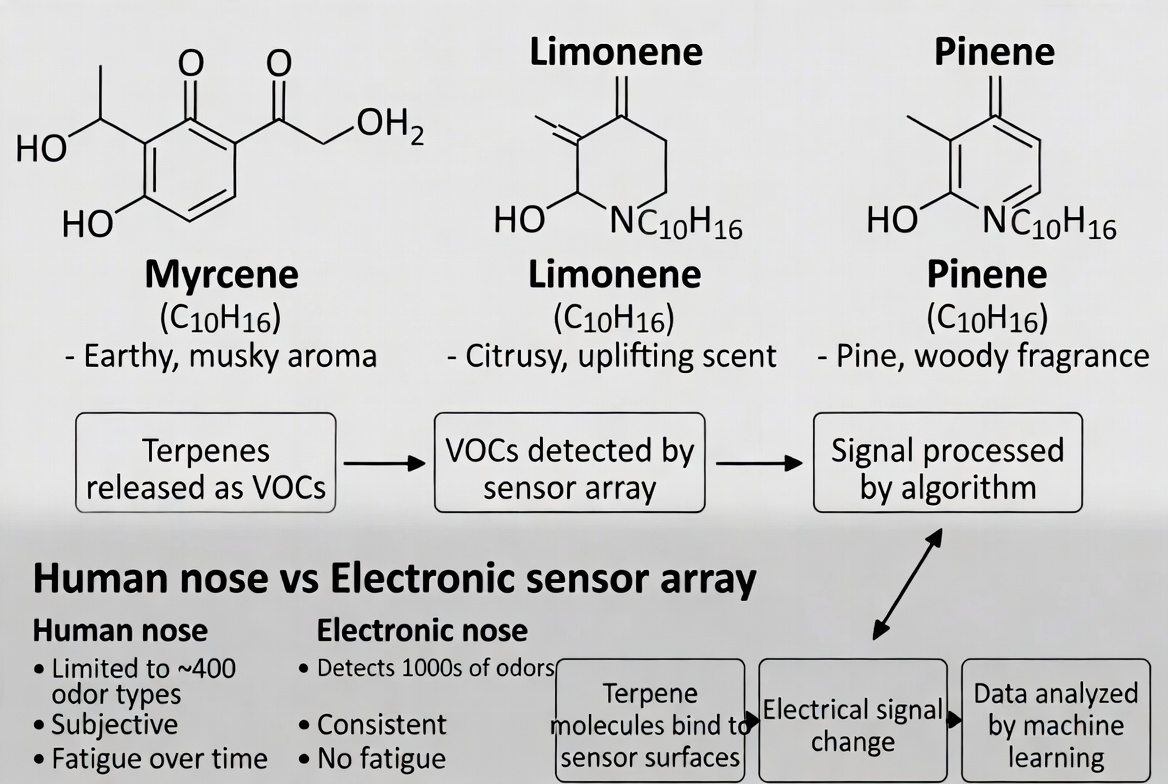
Caption: Cannabis odor comes primarily from terpenes (volatile organic compounds — VOCs). Sensors detect these airborne molecules.
How Odor Detection Sensors Work
- Volatile Organic Compounds (VOCs): Cannabis releases hundreds of terpenes and other compounds. Myrcene (earthy/musky), limonene (citrus), and caryophyllene (spicy) are signature markers.
-
Sensor Technology:
- Metal Oxide Semiconductor (MOS) sensors: Change electrical resistance when VOCs bind to them.
- Photoionization Detectors (PID): Use UV light to ionize molecules and measure current.
- Quartz Microbalance or Surface Acoustic Wave sensors: Detect mass changes from odor molecules.
- AI-Enhanced Electronic Noses: Arrays of multiple sensors + machine learning create a “fingerprint” for cannabis vs. other smells. Modern units can distinguish cannabis from similar odors (e.g., hops or skunk).
- Sensitivity: Some portable units detect parts-per-billion (ppb) levels — enough to sense a small grow from outside a sealed room.
- Deployment: Handheld wands, vehicle-mounted units, stationary sniffers near suspected properties, or drone-carried sensors.

Caption: Portable electronic noses allow officers to scan vents, windows, or doors for cannabis VOC signatures.
Law Enforcement Applications
- Targeted Scans: After a tip or power-bill flag, officers use handheld sensors at property lines or near exhaust vents.
- Vehicle-Mounted Systems: Some departments mount sensitive arrays on patrol cars for neighborhood sweeps.
- K-9 Integration: Dogs remain the gold standard (highly sensitive and court-accepted), but electronic sensors provide objective, 24/7 data without handler bias.
- Probable Cause: Positive sensor readings + other indicators (thermal hits, high power use) help secure search warrants.
- Emerging Tech: Drone-mounted sniffers and AI networks that monitor public areas for spikes in cannabis terpenes.
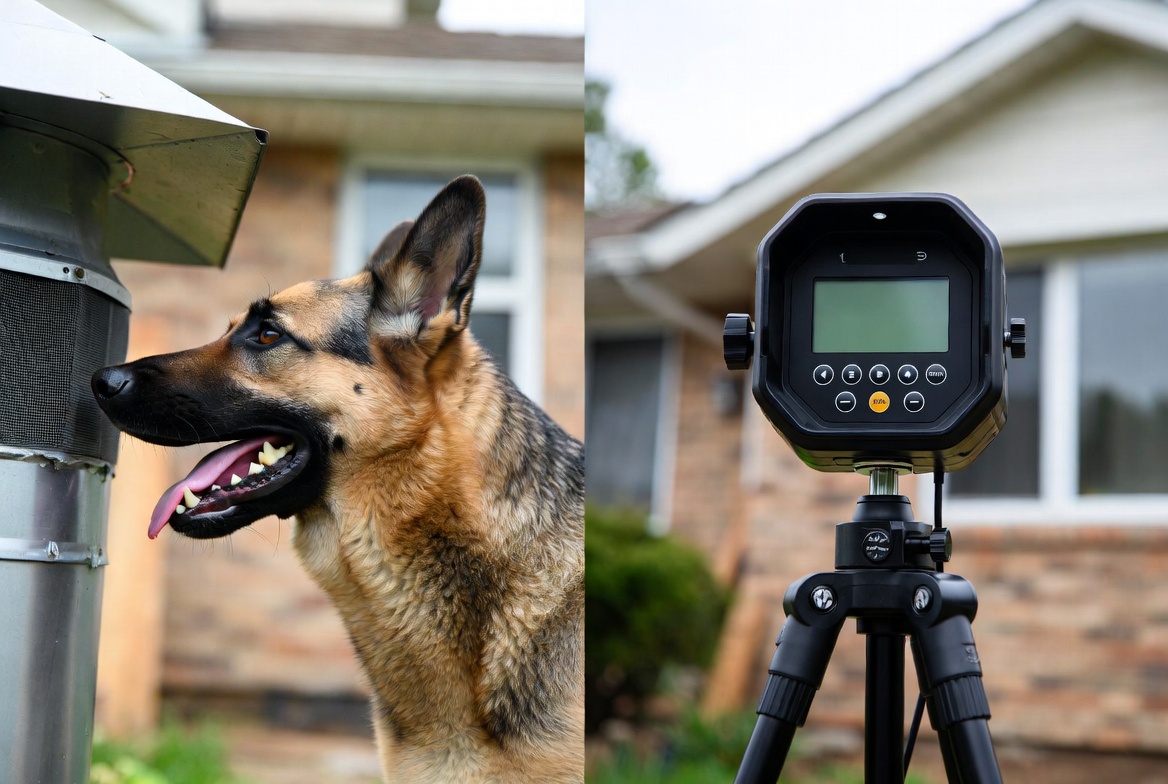
Caption: Traditional K-9 units work alongside newer electronic VOC sensors for reliable odor detection.
Limitations & Challenges
- False Positives: Legal hemp, essential oils, or nearby legal grows can trigger alerts.
- Environmental Factors: Wind, rain, temperature, and strong competing odors reduce effectiveness.
- Sealing & Filtration: Carbon filters, negative pressure rooms, and ozone generators can significantly reduce detectable odor (though not always 100%).
- Legal Admissibility: Sensor results often require corroboration; courts scrutinize calibration and operator training.
- Counter-Evolution: Growers invest in better filtration, but leaks during harvest or maintenance remain common vulnerabilities.
Real-World Context: Odor complaints + sensor confirmation remain among the fastest ways unlawful indoor grows are discovered — often faster than thermal imaging alone.
Bottom Line for Readers: Advanced odor sensors make it increasingly difficult to hide a home grow completely. Law enforcement combines them with power monitoring, thermal imaging, and community tips into multi-layered detection strategies.
For TheStonerReview.com readers, the clearest message is simple: where cultivation is illegal, the risks are real and the technology is improving. Support legal reform and enjoy cannabis responsibly through licensed channels.

Environment Beats Hype Genetics
Fancy seeds will not save a tent with light leaks, wild VPD, or lazy dry-backs. Dial environment first: stable lights-off temps, honest airflow, and a dry that does not rush the plant into hay. Genetics matter — but only after the room stops lying to you.
Document every run. The growers who improve are the ones who write down what actually happened, not what the forum promised.
Harvest Timing Without the Myths
Trichomes tell more truth than calendar apps. Cloudy with a measured amber percentage beats harvesting because you got impatient. Cure is half the product. If you rush jars, you erase months of work in a week.
Keep the Culture in the Garden
Home grow is not just yield math. It is continuity — the same stubborn plant love that existed before delivery apps. Share clones with people who will respect them. Smoke what you grow before you brag about it online.
Keep Reading on The Stoner Review
More field notes from the same smoke-stained notebook:
Find more gritty, honest stories, strain reviews, travel guides, and multi-minded stoner perspectives at theStonerReview.com/blog.


