

Terpene Detection Mechanisms: The Science Behind Cannabis Odor Sensing
Terpene Detection Mechanisms: The Science Behind Cannabis Odor Sensing
Educational Context: Terpenes are the primary aromatic compounds in cannabis responsible for its distinctive smell. Law enforcement odor detection (electronic sensors, K-9 units, and even neighbor complaints) targets these volatile molecules. This is a continuation of our series on grow detection technology for TheStonerReview.com readers.

Legal Disclaimer: Home cultivation remains illegal in New Jersey. This article is purely informational to raise awareness of detection risks. Always comply with state and federal laws.
What Are Terpenes?
Terpenes are volatile organic compounds (VOCs) — lightweight, aromatic molecules produced in cannabis trichomes alongside cannabinoids. Over 100 terpenes exist in cannabis, but a few dominate the scent profile:
- Myrcene — Earthy, musky, herbal (most abundant in many strains like Dream OG)
- Limonene — Citrus, lemony
- Pinene — Pine, woody
- Caryophyllene — Spicy, peppery
- Humulene — Hoppy, earthy
These molecules evaporate easily at room temperature, creating the strong “cannabis odor” especially during flowering and harvest.
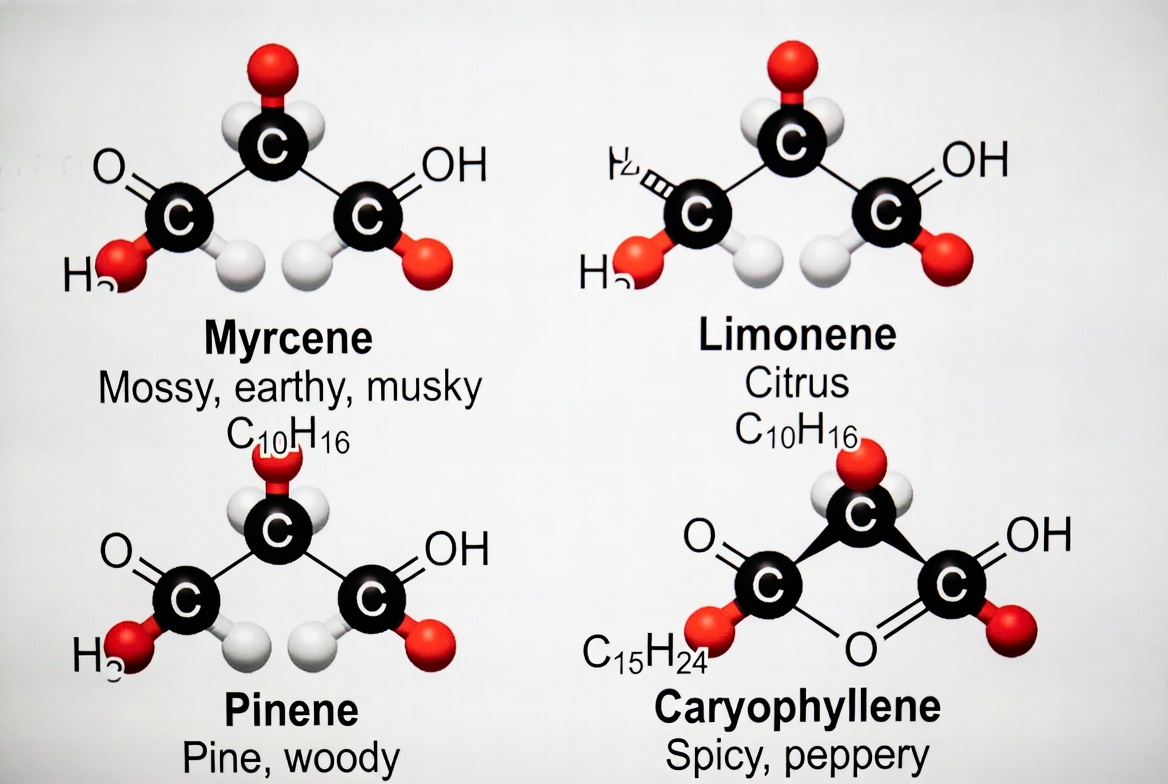
Caption: Common cannabis terpenes and their characteristic aromas — the molecules that odor sensors target.
How Terpenes Are Released
- Produced in resin glands (trichomes).
- Released into the air as VOCs when plants are disturbed, flowering peaks, or exhaust vents leak.
- Concentration spikes dramatically in enclosed grows without proper carbon filtration or negative pressure.
Terpene Detection Mechanisms
1. Electronic Sensors (Artificial “Noses”)
Modern law enforcement VOC detectors use several technologies to identify terpene signatures:
-
Metal Oxide Semiconductor (MOS) Sensors:
- Heated metal oxide layer (e.g., tin dioxide).
- Terpene molecules adsorb onto the surface → change electrical resistance.
- Pattern of resistance changes across a sensor array creates a unique “fingerprint” for cannabis.
-
Photoionization Detectors (PID):
- UV lamp ionizes terpene molecules.
- Freed electrons create measurable current proportional to concentration.
- Very sensitive (ppb levels) and fast response.
-
Quartz Crystal Microbalance (QCM) or Surface Acoustic Wave (SAW):
- Terpenes stick to a coated crystal → changes vibration frequency.
- Highly specific when coated with materials that bind particular terpenes.
-
AI/Machine Learning Enhancement:
- Sensor arrays (multiple types) feed data into algorithms trained on cannabis profiles.
- Distinguishes cannabis from similar smells (hops, pine cleaners, etc.).
Process Flow: Air sample → Terpenes bind/interact with sensors → Electrical/chemical signal → Processed signal → Alert (“Cannabis detected”).
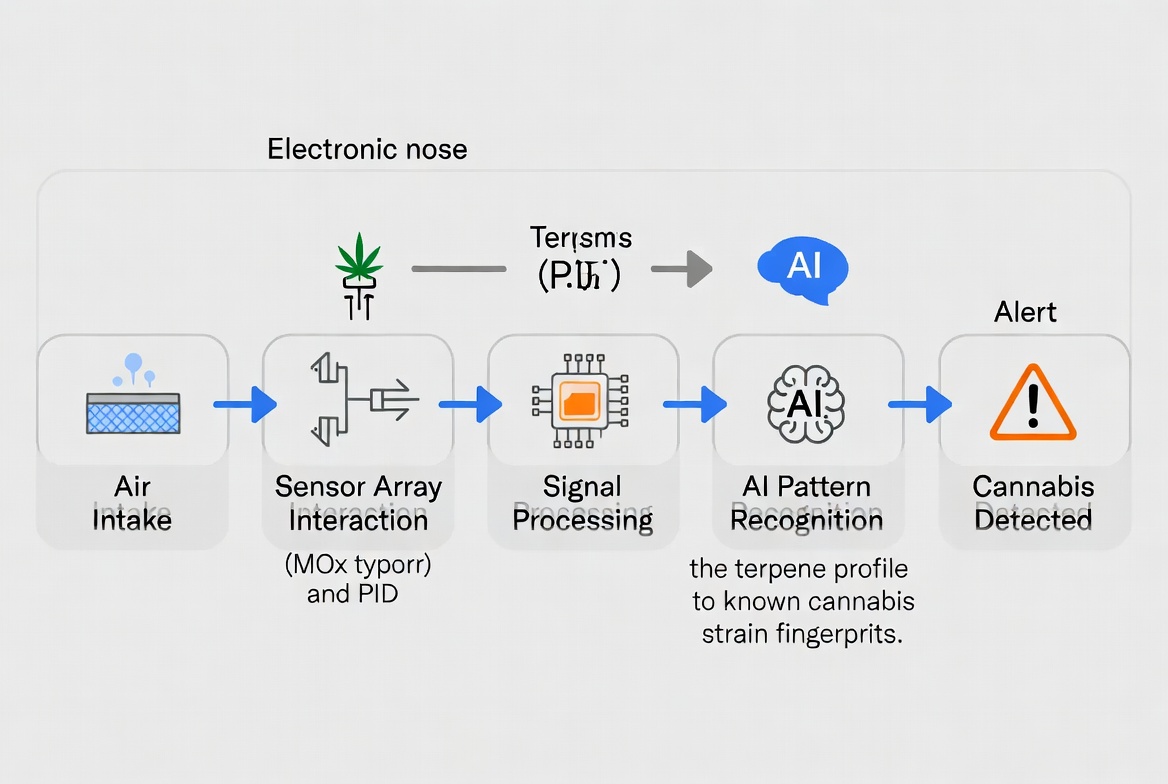
Caption: How electronic odor sensors detect cannabis terpenes in real time.
2. Biological Detection (K-9 Units & Human Nose)
-
Dogs (K-9):
- Up to 300 million olfactory receptors (vs. 6 million in humans).
- Trained specifically on cannabis terpene profiles.
- Can detect trace amounts from vents or vehicles; highly mobile and court-admissible.
-
Humans:
- ~400 receptor types; sensitive but subjective and prone to fatigue.
- Neighbor complaints often start investigations because flowering cannabis odor travels far.
3. Emerging & Hybrid Systems
- Drone-mounted or stationary sensor networks.
- Gas chromatography-mass spectrometry (GC-MS) in labs for confirmation (gold standard but not field-portable).
- Combined with thermal/power data for stronger probable cause.

Practical Law Enforcement Use
Handheld wands or vehicle units scan outside properties. A positive terpene hit, especially with other indicators (power bills, thermal signatures), builds cases quickly. Carbon filters reduce but rarely eliminate leaks entirely — maintenance, harvest, and door openings are common weak points.
Key Takeaway: Terpene detection has become highly sophisticated because these VOCs are unique, abundant, and hard to completely contain. Technology improvements (AI + multi-sensor arrays) continue to close loopholes.
For legal cannabis consumers in permitted states, proper odor control (industrial carbon filters, sealed rooms, negative pressure) is standard practice. In restricted areas like New Jersey, awareness of these mechanisms underscores the importance of staying within legal channels.
Nose First, Percentage Second
Lab printouts are useful. They are not the whole story. A cut that smells loud, cured clean, and burns white will outperform a bigger THC number that tastes like cardboard. Ask for the nose. Ask who grew it. Ask what the jar smelled like when it opened — not just what the sticker claims.
At The Stoner Review we score what we actually smoke: flavor, effect shape, ash, and whether we would buy it again with our own money. That is the difference between a menu write-up and a field note.
How We Session It
We start light, then push the dose once the terp profile is clear. Daytime cuts get daylight tests. Heavy indica leaners get evening runs. If a pre-roll or flower cannot survive a real session without canoeing, harshing, or disappearing into generic haze, it does not get a free pass from marketing copy.
Keep notes. Compare against last month's shelf. The culture moves fast; your memory should move with it.
Keep Reading on The Stoner Review
More field notes from the same smoke-stained notebook:
Find more gritty, honest stories, strain reviews, travel guides, and multi-minded stoner perspectives at theStonerReview.com/blog.


