

The Hidden Dumpling Multiverse at Your Local Asian Market
Walk into almost any Asian market and head to the freezer section. That wall of dumplings isn’t just frozen food — it’s a portal. Different regions, different wrappers, different fillings, different ways they hit depending on how you cook them and what you dip them in.
Here’s the real tour — the ones worth grabbing, how they’re traditionally eaten, and the exact sauces that make them dangerous.


1. Northern China – Jiaozi (Boiled or Pan-Fried)
These are the thick-skinned, pleated classics. Usually pork + cabbage or chive, but you’ll find beef, lamb, and vegetable versions too. The frozen ones from brands like Wei-Chuan or homemade-style packs are solid.
Best move: Pan-fry until the bottoms are golden and crispy, then steam briefly with a splash of water (the classic potsticker method).
Sauce: Black Vinegar Chili Dip This is the one that cuts through the richness.
Micro Recipe:
- 3 tbsp Chinkiang black vinegar (the good stuff)
- 1 tbsp light soy sauce
- 1–2 tsp chili oil (Sichuan style if you can find it)
- 1 small garlic clove, finely grated
- ½ tsp sesame oil
- Pinch of sugar (optional, rounds it out)
Mix everything. Let it sit 5 minutes. The garlic blooms and the vinegar stays sharp.

2. Japan – Gyoza
Thinner wrapper than Chinese jiaozi, usually pork + cabbage + garlic + ginger. The frozen ones (especially Ajinomoto or local Japanese brands) are consistently good.
Best move: Heavy pan-fry for maximum crispy bottom. These are built for that texture contrast.
Sauce: Classic Gyoza Dipping Sauce Simple, sharp, and perfect.
Micro Recipe:
- 2 tbsp soy sauce
- 1 tbsp rice vinegar (or black vinegar)
- 1 tsp sesame oil
- 1 tsp chili oil or rayu (Japanese chili oil)
- Optional: pinch of sugar + chopped green onion
The rice vinegar keeps it bright. The sesame oil makes it smell like the izakaya.
3. Korea – Mandu
Bigger, juicier, often with glass noodles or more vegetable in the mix. You’ll see both steamed and pan-fried versions in the freezer. The good ones have that slight chew.
Best move: Pan-fry until crispy on the bottom, or steam and then give them a quick sear. Some people deep-fry them too.
Sauce: Gochujang Soy A little sweet, a little spicy, very moreish.
Micro Recipe:
- 2 tbsp soy sauce
- 1 tbsp gochujang (adjust for heat)
- 1 tsp rice vinegar or apple cider vinegar
- 1 tsp sesame oil
- 1 tsp honey or sugar
- Chopped green onion + sesame seeds to finish
This sauce also works stupidly well on leftover mandu the next day.

4. Tibet / Nepal – Momos
These are the ones with the twisted top. Usually yak or beef in the Himalayas, but in the diaspora you’ll find pork, chicken, and vegetable. The frozen ones at good markets are surprisingly close to what you get in a proper momo shop.
Best move: Steam them. That’s non-negotiable for the real texture.
Sauce: Spicy Tomato Chutney This is what actually makes momos dangerous.
Micro Recipe (quick version):
- 2 medium tomatoes, roughly chopped
- 2–3 dried red chilies (or 1–2 tsp chili flakes)
- 2 garlic cloves
- Small piece of ginger
- Handful of cilantro
- Salt + a squeeze of lemon or dash of vinegar
- Optional: 1 tsp toasted sesame seeds

Runtz Short-Sleeve Unisex T-Shirt
Cannabis streetwear without the corporate leaf clipart.
Shop Now →Blend everything raw or give it a quick simmer. The raw version is fresher and brighter. The simmered version is deeper. Both slap.
5. Thailand – Kanom Jeeb (or Siomai-style)
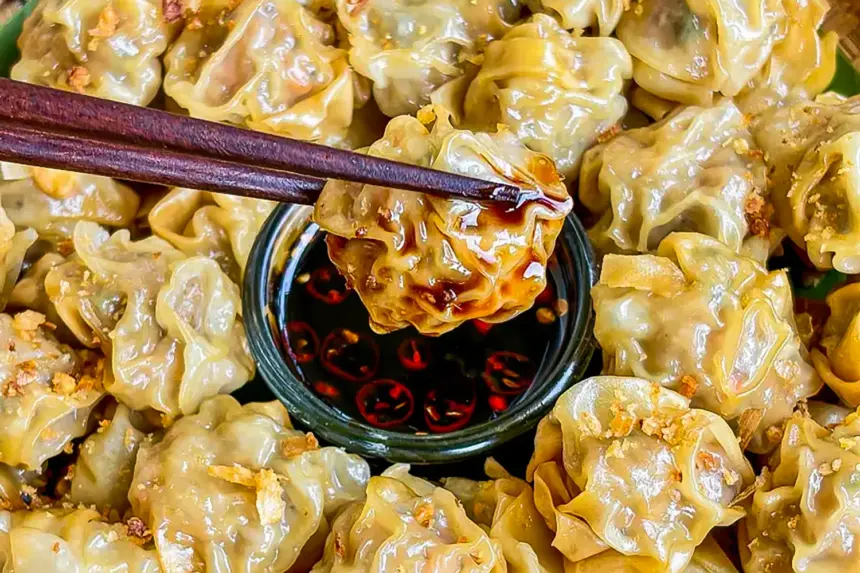
These are the open-topped ones with the yellow wonton wrapper, usually pork + shrimp or crab. You’ll find them in the freezer section labeled kanom jeeb or sometimes under the Filipino siomai name (very similar).
Best move: Steam them. Some people pan-fry after, but steaming keeps the filling juicy.
Sauce: Sweet-Savory Chili Dip Many places just use store-bought sweet chili, but this quick version is better.
Micro Recipe:
- 2 tbsp soy sauce
- 1 tbsp sugar (palm sugar if you have it)
- 1–2 tsp chili flakes or sliced fresh Thai chili
- 1 tsp lime juice or vinegar
- 1 small garlic clove, minced
- Optional: crushed peanuts on top
It hits sweet, salty, spicy, and sour all at once — exactly what these dumplings want.
Quick Field Notes from the Freezer Aisle
- Look for brands that list actual ingredients instead of mystery “meat.” The ones with Chinese or Korean writing on the bag are usually more honest.
- Pan-fry vs steam changes everything. Pan-fried = crispy bottom, more indulgent. Steamed = cleaner, juicier, lets the filling speak.
- These all travel well. Make a big batch, freeze what you don’t eat, and you’ve got emergency munchies that actually taste like something.
The Asian market freezer section is one of the last places where you can still eat your way across an entire continent without leaving your zip code. Grab a few different bags next time. Cook one style. Dip it properly. See which region your soul needed that night.
Which one are you grabbing first?
Keep Reading on The Stoner Review
More field notes from the same smoke-stained notebook:
Find more gritty, honest stories, strain reviews, travel guides, and multi-minded stoner perspectives at theStonerReview.com/blog.


