

The Silent Fade: How Your Brain Quietly Turns Down the Volume on THC
.
The Silent Fade: How Your Brain Quietly Turns Down the Volume on THC

My Ex Short-Sleeve Unisex T-Shirt
Cannabis streetwear without the corporate leaf clipart.
Shop Now →In the haze of another heavy session, Jax packed his bowl expecting the usual lift. The first hit still carried warmth, but the magic had grown distant—colors less vivid, the couch heavier, the euphoria flatter. What started as weekend ritual had become daily routine, and the plant that once transported him now barely moved the needle. That’s when the biology behind the burnout became impossible to ignore

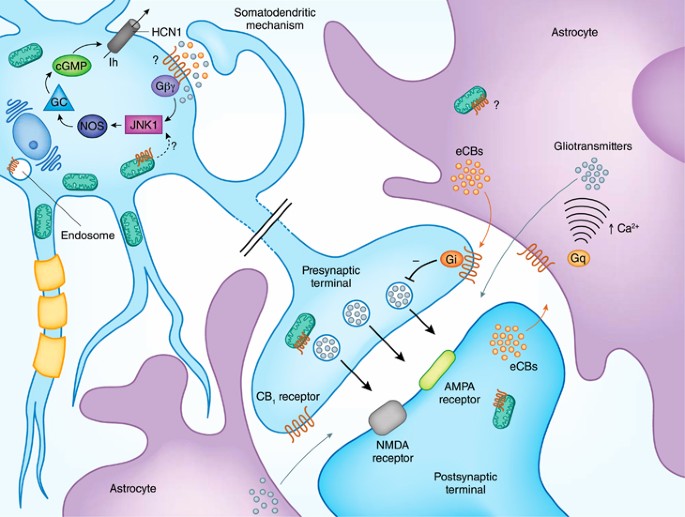
Chronic THC Exposure: CB1 Downregulation THC floods the system and overstimulates CB1 receptors on nerve cells. The brain adapts by pulling receptors inside the cell and reducing their surface presence. Desensitization sets in. The graphic you provided maps this process with striking clarity—internalization, reduced availability, the slow quieting of the signal.

Jax felt it in the small things: stronger coffee needed in the morning, louder music at night, and that nagging sense that something essential had gone flat.
The Break Begins: Signal Removal & Receptor Recycling He finally listened to the veterans and set the herb aside. Within 48 hours, early recovery stirs. One to two weeks brings noticeable sensitivity returning as receptors recycle back to the membrane. Vivid dreams flooded back. Food tasted sharper. Sleep deepened even while feeling restless.

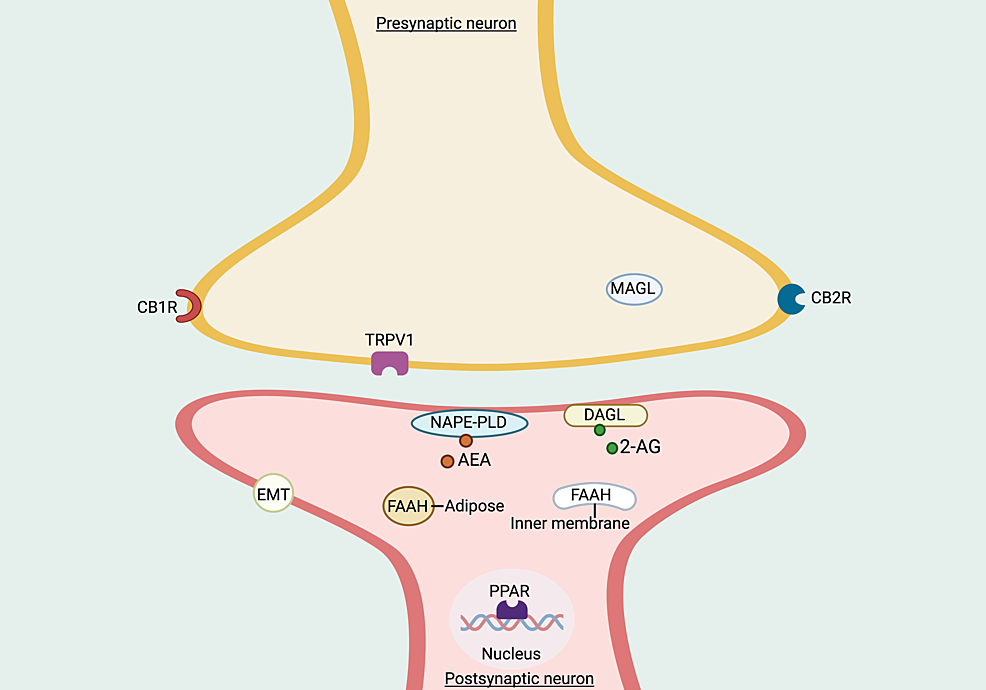
Receptor Recovery & Resensitization By three to four weeks, the reset deepens. Baseline endocannabinoids reclaim their role. Sensitivity climbs. For heavy daily users, this is where the ceiling lifts entirely.

When Jax finally lit up again after 28 days, the experience felt reborn. Terpenes sang. Body effects landed with precision. The high was cleaner, richer, longer-lasting—almost respectful.


The Honest Takeaway for Every Stoner This isn’t abstract science. It’s the cellular truth behind every “this shit used to slap harder” conversation and every successful tolerance break story. Your endocannabinoid system is remarkably resilient—but it demands respect. Chronic daily use without resets turns the volume down. Strategic breaks turn it back up.
At theStonerReview.com, we document these realities so you can chase the best possible experience—whether daily microdosing with awareness or deliberate resets that make every session feel legendary again. The shirts we build together carry this knowledge: respect the plant, respect the reset.
Jax is back in rotation now, but smarter. He cycles. He listens to his receptors. When the fade creeps in again, he already knows the map out.
What’s your tolerance break story? How long do you wait, and what changes when the receptors wake back up? Drop it in the comments or on the site. The conversation—and the next level—starts here. Stay lifted, stay aware.
Nose First, Percentage Second
Lab printouts are useful. They are not the whole story. A cut that smells loud, cured clean, and burns white will outperform a bigger THC number that tastes like cardboard. Ask for the nose. Ask who grew it. Ask what the jar smelled like when it opened — not just what the sticker claims.
At The Stoner Review we score what we actually smoke: flavor, effect shape, ash, and whether we would buy it again with our own money. That is the difference between a menu write-up and a field note.

How We Session It
We start light, then push the dose once the terp profile is clear. Daytime cuts get daylight tests. Heavy indica leaners get evening runs. If a pre-roll or flower cannot survive a real session without canoeing, harshing, or disappearing into generic haze, it does not get a free pass from marketing copy.
Keep notes. Compare against last month's shelf. The culture moves fast; your memory should move with it.
What Real Heads Ask at the Counter
Skip “what’s strongest.” Try: What’s fresh this week? What still smells like itself after the cure? Anything from a grower who will talk terps without reading a script? Those questions sort tourists from regulars — and they sort good shops from gift-shop energy.
One More Pass From the Notebook
We keep revisiting jars, floors, and fits because cannabis culture is not a press release — it is a practice. Come back tomorrow with a clearer nose, a sharper question, and less patience for potency theater. The Stoner Review will still be here, writing like the Wi-Fi might die and the circle outside is the only network that matters.
Support independent cannabis media when the algorithm gets weird. Share the pieces that help somebody shop smarter. And when a brand tries to sand the joke off the plant, remember who was in the room first.
Keep Reading on The Stoner Review
More field notes from the same smoke-stained notebook:
Find more gritty, honest stories, strain reviews, travel guides, and multi-minded stoner perspectives at theStonerReview.com/blog.


