

There’s no single “age” when lifelong stoners develop cognitive decline — it varies significantly based on factors like age of onset, frequency/dosage, duration, genetics, and whether use continues.
There’s no single “age” when lifelong stoners develop cognitive decline — it varies significantly based on factors like age of onset, frequency/dosage, duration, genetics, and whether use continues. Research shows a nuanced picture rather than a clear universal timeline.


Key Findings from Major Studies
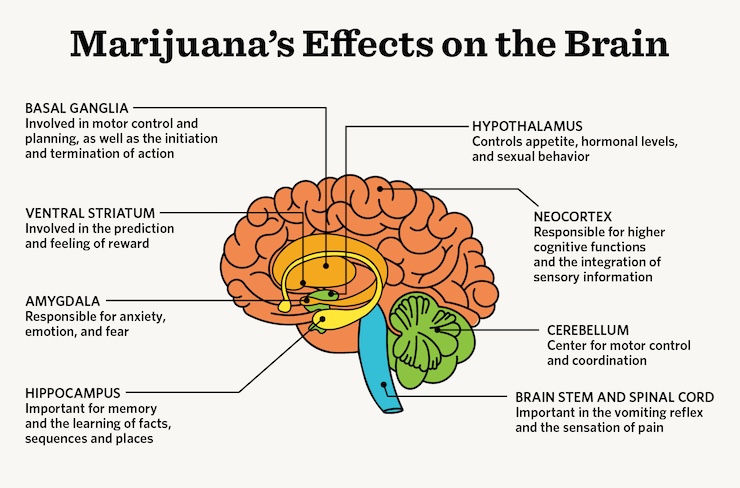
- Midlife (roughly 38–45 years old) is when deficits often become measurable for heavy, persistent users. The landmark Dunedin study (followed ~1,000 people from childhood to age 45) found that long-term heavy users (weekly or more, often starting in adolescence) showed an average 5.5 IQ point decline from childhood, plus poorer learning, processing speed, and memory/attention issues reported by informants. The most persistent adolescent-onset users lost up to 8 IQ points. These effects were specific to cannabis and not fully explained by other drugs, education, or socioeconomic status. Long-term users also had smaller hippocampal volume (key for memory).
- Effects can appear earlier (20s–30s) in heavy users. A large 2025 brain imaging study of over 1,000 young adults (average age ~29) found heavy lifetime users (>1,000 uses) had reduced brain activation during working memory tasks, even after accounting for recent use. This suggests some changes may persist or accumulate over decades of heavy use.
- Early onset (before ~16–18) increases risk and severity. Adolescent brain development makes users more vulnerable. Starting young and continuing heavily is linked to more pronounced, potentially longer-lasting deficits.
- In older adults (60+), the picture is more mixed or even neutral/positive in some data. Recent large cohort studies and genetic analyses found no strong link between lifetime cannabis use and accelerated cognitive decline or dementia risk. Some past users showed better performance or slower decline in certain domains (e.g., executive function). However, very heavy long-term use may still carry risks, and more research is needed.
Important Caveats
- Not all users are affected equally. Light/moderate or occasional users, and those who quit, often show little to no lasting decline. Many acute effects (e.g., on memory/attention) improve significantly after 72 hours to a few weeks of abstinence, though heavy users may take longer or retain subtle deficits.
- Dose, potency, and method matter — modern high-THC products may differ from older studies.
- Confounding factors exist (e.g., lifestyle, other substance use, pre-existing vulnerabilities), but well-controlled longitudinal studies still point to cannabis-specific risks for heavy users.
- Some studies suggest possible neuroprotective effects in certain contexts (e.g., older adults or specific cognitive tasks), but this is not settled science and doesn’t outweigh risks for heavy adolescent-onset use.
Bottom line for lifelong stoners: If use was heavy and started young, subtle-to-moderate cognitive changes (especially working memory, learning, processing speed) are most reliably detected around midlife (late 30s to mid-40s). For lighter or later-onset use, risks appear lower, and in later life the association with decline weakens or disappears in current data. Individual results vary widely.
This is a complex, evolving area of research with some conflicting findings. Cannabis isn’t harmless for brain health in heavy long-term patterns, but it’s also not a guaranteed path to decline. If this is personally relevant, consider discussing with a doctor familiar with cannabis research — and abstinence periods can help assess reversibility.
Field Notes, Not Brochure Copy
The Stoner Review writes from the smoke spot: what burned clean, what tasted like marketing, and what we would spend on again. If a claim cannot survive a real session, it does not survive our page.
How to Read This Like a Head
Take what helps. Ignore the flex. Cross-check jars with your own nose. The best cannabis writing should make you a sharper shopper, not a louder commenter.
Stay in the Room

Algorithms throttle. Brands rebrand. The circle outside still decides who gets the next light based on whether you feel real. Keep showing up for the culture that still remembers where it came from.
One More Pass From the Notebook
We keep revisiting jars, floors, and fits because cannabis culture is not a press release — it is a practice. Come back tomorrow with a clearer nose, a sharper question, and less patience for potency theater. The Stoner Review will still be here, writing like the Wi-Fi might die and the circle outside is the only network that matters.
Support independent cannabis media when the algorithm gets weird. Share the pieces that help somebody shop smarter. And when a brand tries to sand the joke off the plant, remember who was in the room first.
Keep Reading on The Stoner Review
More field notes from the same smoke-stained notebook:
Find more gritty, honest stories, strain reviews, travel guides, and multi-minded stoner perspectives at theStonerReview.com/blog.


