

Thermal Imaging Technology (FLIR) Deep Dive: How Law Enforcement Spots Indoor Cannabis Grows
Thermal Imaging Technology (FLIR) Deep Dive: How Law Enforcement Spots Indoor Cannabis Grows
Legal Disclaimer: This article is strictly educational and informational for TheStonerReview.com readers. Home cannabis cultivation remains illegal in New Jersey (as of April 2026). Unlawful grows can lead to serious legal consequences. We do not condone or encourage illegal activity — the goal is awareness so readers can make informed, compliant choices. All information is drawn from publicly available law enforcement reports, court cases, and technical descriptions of thermal imaging systems.

Thermal imaging, often called FLIR (Forward-Looking Infrared), is one of the most effective tools law enforcement uses to detect indoor cannabis grows. It turns invisible heat into visible images, revealing “hot spots” that normal cameras or the naked eye can’t see.
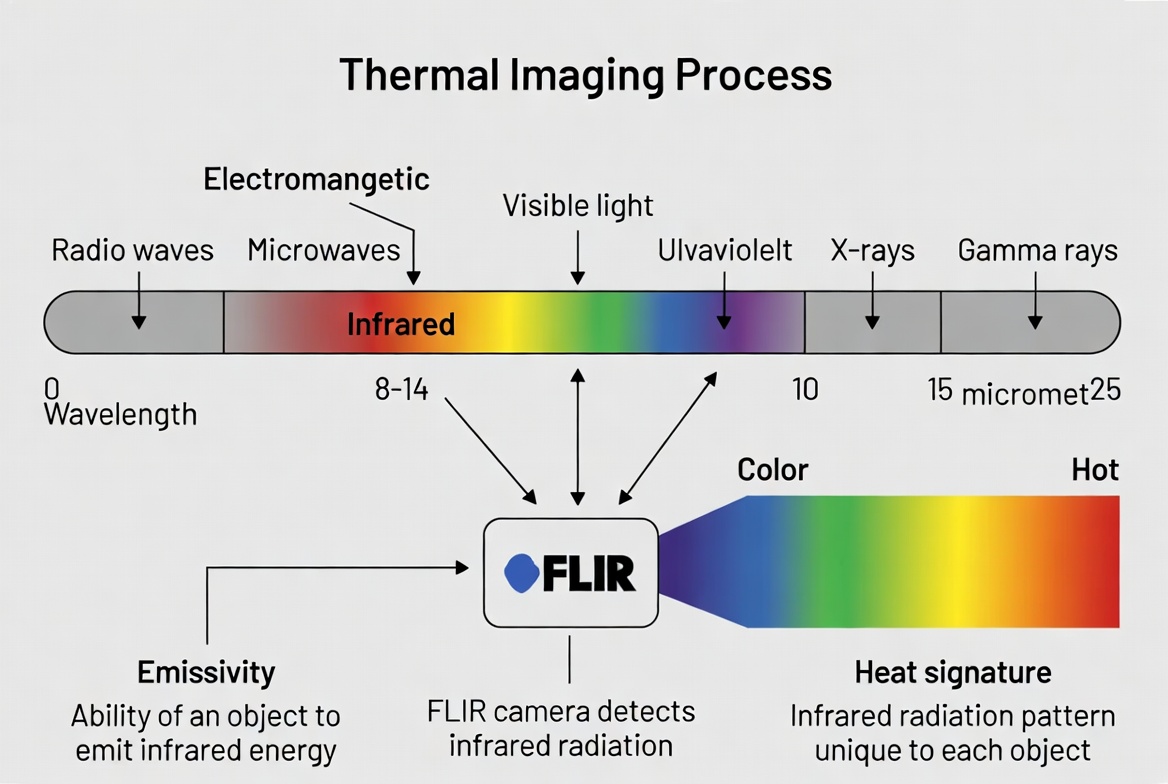
Caption: Thermal imaging captures infrared radiation emitted by warm objects — hotter areas appear brighter or in “hot” colors (yellow/red).
How Thermal Imaging Technology Works (The Science)
- Infrared Radiation: Everything above absolute zero emits infrared (IR) heat energy. Grow lights, ballasts, exhaust fans, and dense plant canopies produce significant heat.
- Wavelengths: FLIR cameras detect long-wave infrared (8–14 micrometers) — the range where most everyday heat signatures appear.
- Image Creation: The camera’s sensor array converts IR radiation into electrical signals, then into a color-coded image (thermal palette). Blue/purple = cool; red/yellow/white = hot.
-
Key Advantages:
- Works in complete darkness.
- Sees through smoke/fog (limited).
- Detects temperature differences as small as 0.1°C.
- Modern Systems: Police helicopters and drones use stabilized, high-resolution FLIR pods (e.g., FLIR Star SAFIRE or similar law-enforcement models) with zoom and real-time video feed.
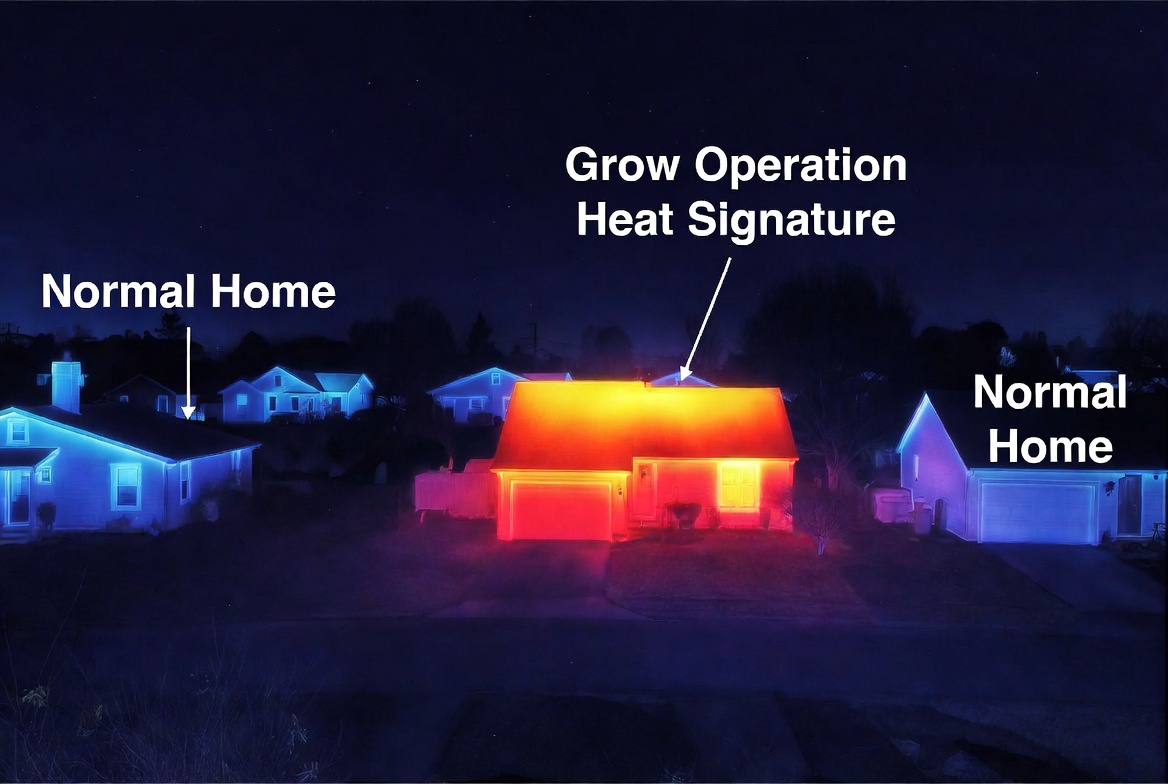
Caption: Thermal view from the air — grow operations stand out as unnatural hot spots against cooler surroundings.
How Law Enforcement Uses Thermal Imaging for Grow Detection
- Aerial Patrols (Helicopters & Drones): Police helicopters equipped with FLIR fly over neighborhoods at night or in cool weather when heat contrast is highest. A single indoor grow room can raise roof temperatures by 10–30°F or more. Drones offer quieter, lower-altitude scans for targeted investigations.

Caption: Helicopters with mounted FLIR systems are a primary tool for spotting indoor grows from above.
- Ground & Handheld Use: Officers use portable thermal cameras during warrant service or tip follow-ups to scan walls, roofs, and vents for heat leaks.
- Combined Evidence: Thermal hits rarely stand alone — they’re paired with power bill spikes, odor complaints, or visual signs (blacked-out windows) to build probable cause for warrants.
Limitations of Thermal Imaging
- Not Foolproof: Modern grows use efficient LEDs (less heat than old HPS lights), insulation, and heat exchangers to mask signatures. Rain, wind, or daytime scans reduce effectiveness.
- Legal Restrictions: U.S. Supreme Court rulings (e.g., Kyllo v. United States, 2001) prohibit warrantless thermal imaging of homes. Agencies must obtain warrants or combine with other evidence.
- False Positives: Hot water heaters, grow lights for legal houseplants, or even server rooms can trigger alerts.
- Countermeasures: Growers sometimes use thermal blankets, extra insulation, or underground setups — but these are often still detectable with advanced systems.
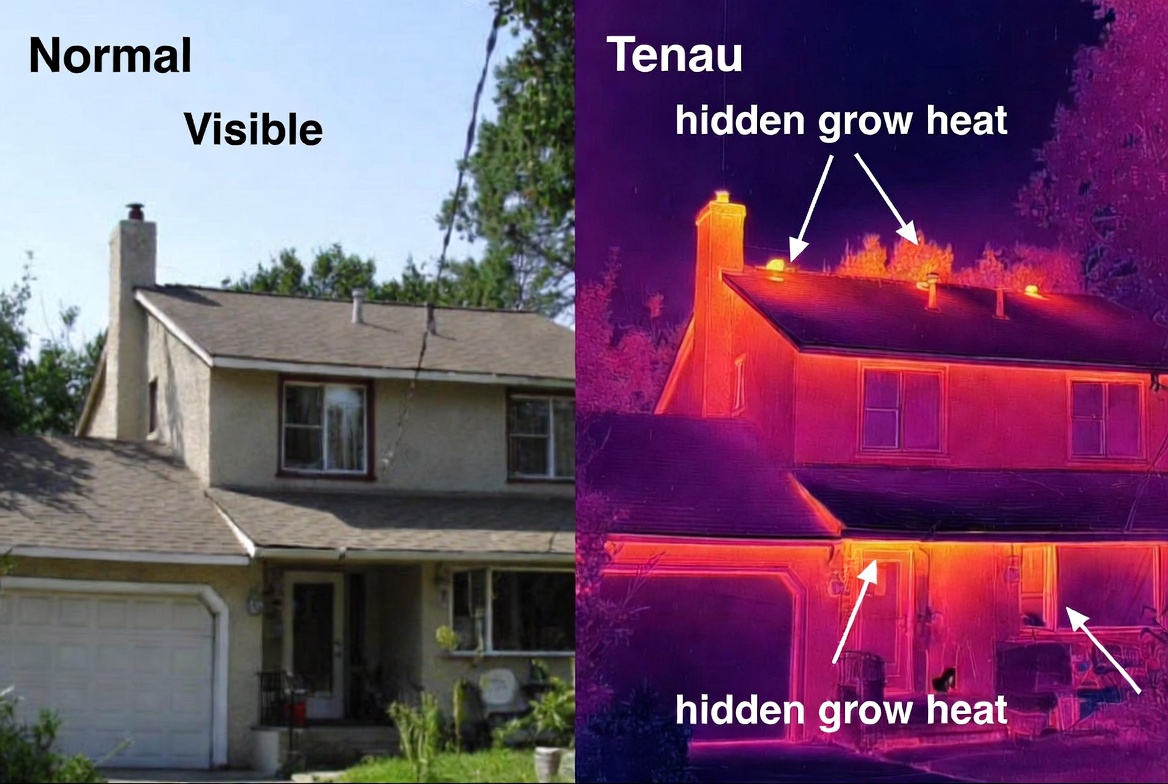
Caption: What looks like an ordinary house in visible light can reveal clear grow activity in thermal imaging.

Bottom Line: Thermal imaging has become a sophisticated, widely used tool because indoor grows generate unmistakable heat patterns. Law enforcement continues to invest in better drones and AI-enhanced FLIR systems for faster detection. For anyone considering home growing, the risks are real and the technology is only improving.
Environment Beats Hype Genetics
Fancy seeds will not save a tent with light leaks, wild VPD, or lazy dry-backs. Dial environment first: stable lights-off temps, honest airflow, and a dry that does not rush the plant into hay. Genetics matter — but only after the room stops lying to you.
Document every run. The growers who improve are the ones who write down what actually happened, not what the forum promised.
Harvest Timing Without the Myths
Trichomes tell more truth than calendar apps. Cloudy with a measured amber percentage beats harvesting because you got impatient. Cure is half the product. If you rush jars, you erase months of work in a week.
Keep the Culture in the Garden
Home grow is not just yield math. It is continuity — the same stubborn plant love that existed before delivery apps. Share clones with people who will respect them. Smoke what you grow before you brag about it online.
Keep Reading on The Stoner Review
More field notes from the same smoke-stained notebook:
Find more gritty, honest stories, strain reviews, travel guides, and multi-minded stoner perspectives at theStonerReview.com/blog.


