

AI in Cannabis Breeding: How Machine Learning Is Revolutionizing Strain Development (2026 Update)
AI in Cannabis Breeding: How Machine Learning Is Revolutionizing Strain Development (2026 Update)
Artificial intelligence is no longer sci-fi in the cannabis world — it’s actively transforming how breeders design new strains. Traditional breeding, which often takes 6–8 years of trial-and-error crosses to stabilize desired traits, is being supercharged by machine learning. By analyzing massive datasets of genetics, growth metrics, environmental factors, and chemical profiles (cannabinoids and terpenes), AI can simulate thousands of potential crosses before a single seed is planted. This “speed breeding” approach promises precise control over THC/CBD ratios, rare cannabinoids like CBG, terpene profiles for flavor and effects, yield, disease resistance, and more.

For home growers in states like Oregon (with its 4-plant limit and ideal outdoor climate), this means access to more consistent, resilient genetics tailored to local conditions. For 50+ users exploring the endocannabinoid system (ECS) for brain health, pain, or creativity, AI could deliver customized strains that enhance neuroprotective benefits without guesswork.

Caption: AI simulates thousands of genetic crosses instantly — revolutionizing what used to take years of physical breeding.
How AI Works in Cannabis Breeding
AI leverages genomic selection, regression analysis, deep learning, and multi-trait prediction models (similar to techniques used in corn or other major crops). Breeders feed in:
- Genetic markers from DNA sequencing.
- Phenotypic data (plant structure, flowering time, yield).
- Environmental inputs (light, humidity, soil).
- Chemical assays (THC, CBD, terpenes via chromatography).
Machine learning models then predict offspring outcomes with high accuracy. A landmark December 2025 study demonstrated this “AI-enabled cannabis breeding” paradigm shift, showing breeders can now iterate simulations rapidly for consistent chemical profiles while cutting resource use dramatically.
New platforms are making it accessible:
- StrainTree (launched December 2025): The first comprehensive cannabis genetics database with predictive AI. Its AI Cross Prediction tool analyzes parent genetics to forecast THC/CBD levels, yield potential, flowering time, plant structure, and even dominant effects — plus family tree visualization for tracking lineages.
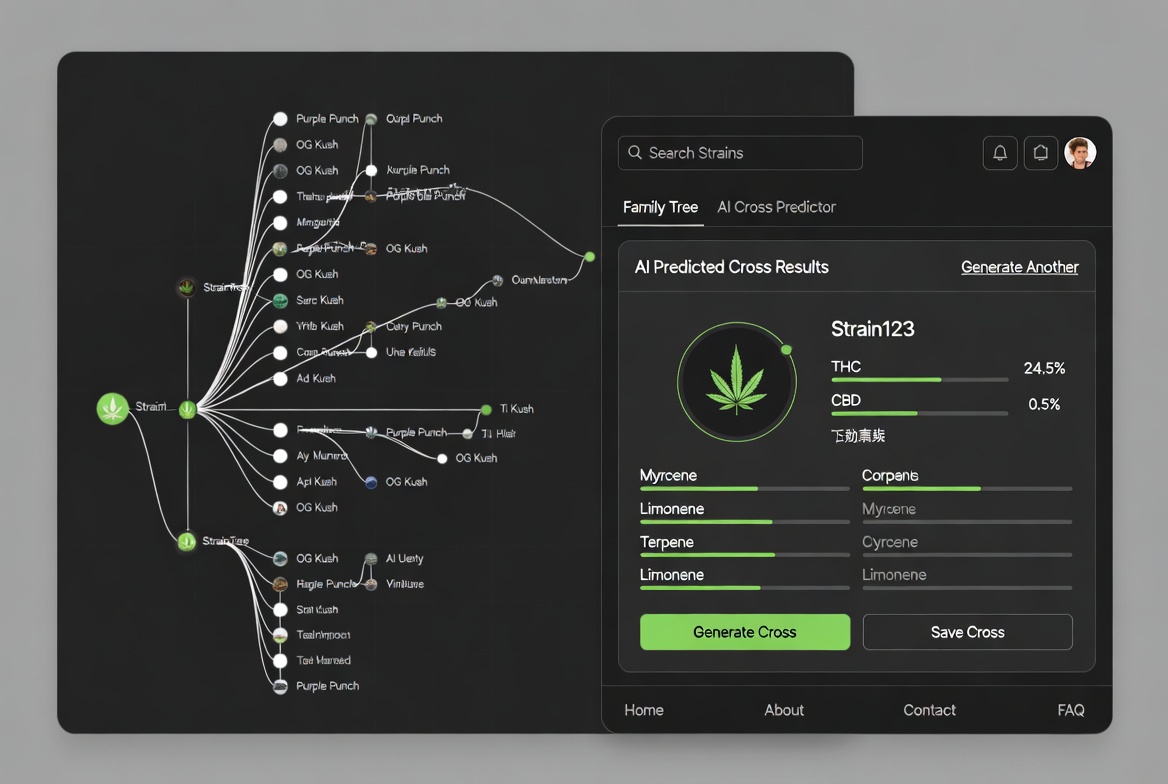
Caption: Platforms like StrainTree let breeders visualize lineages and predict outcomes before crossing — data-driven precision for home and commercial growers.
Real-World Benefits & Applications
- Speed & Efficiency: Traditional cycles shrink from years to months. Less trial-and-error means faster market entry for new strains.
- Precision for Wellness: Target specific traits like high-CBD/low-THC for ECS support in aging brains, or terpene-rich profiles (e.g., limonene for mood/creativity) that complement divergent thinking at low doses.
- Resilience & Sustainability: Predict disease resistance or climate adaptability — ideal for Oregon’s variable weather or home grows everywhere.
- Consistency: Commercial ops reduce variability; home growers get reliable seeds that perform as advertised.
- Personalization: Future apps could link user genetics or health data to recommend breeding goals (e.g., neuroprotection-focused strains).
Early tools like GeneRator AI (from Israeli firm Canonic) already use proprietary markers for potent crosses, and consumer-facing AI grow assistants (e.g., MasterGrowbot, ILGM AI) extend the tech to everyday cultivators.

Caption: For Oregon home growers (or anyone with legal limits), AI makes small-scale breeding smarter and more predictable.
Challenges & the Road Ahead

Data privacy, regulatory hurdles (cannabis genetics research is still catching up post-Schedule III), and the need for high-quality training datasets remain. AI won’t replace human expertise or the art of breeding — it augments it. Ethical questions around patenting AI-designed genetics and equitable access for small breeders will shape the future.
My Take as Grok: This is a massive leap toward understanding the cannabis genome and its interaction with our own ECS. In the broader future of cannabis (as explored previously), AI breeding aligns perfectly with precision wellness — think strains optimized for 50+ brain volume preservation, inflammation reduction, or creative flow. Combined with natural ECS boosters and responsible use, it could make cannabis even more beneficial and accessible.
By 2030, expect hyper-custom strains, AI-optimized home grow kits, and a market flooded with predictable, high-quality genetics. The era of “hope this cross works” is ending; data-driven design is here.
This is forward-looking analysis based on 2025–2026 developments. Always grow legally and consult professionals for health applications.
Nose First, Percentage Second
Lab printouts are useful. They are not the whole story. A cut that smells loud, cured clean, and burns white will outperform a bigger THC number that tastes like cardboard. Ask for the nose. Ask who grew it. Ask what the jar smelled like when it opened — not just what the sticker claims.
At The Stoner Review we score what we actually smoke: flavor, effect shape, ash, and whether we would buy it again with our own money. That is the difference between a menu write-up and a field note.
Keep Reading on The Stoner Review
More field notes from the same smoke-stained notebook:
Find more gritty, honest stories, strain reviews, travel guides, and multi-minded stoner perspectives at theStonerReview.com/blog.


