

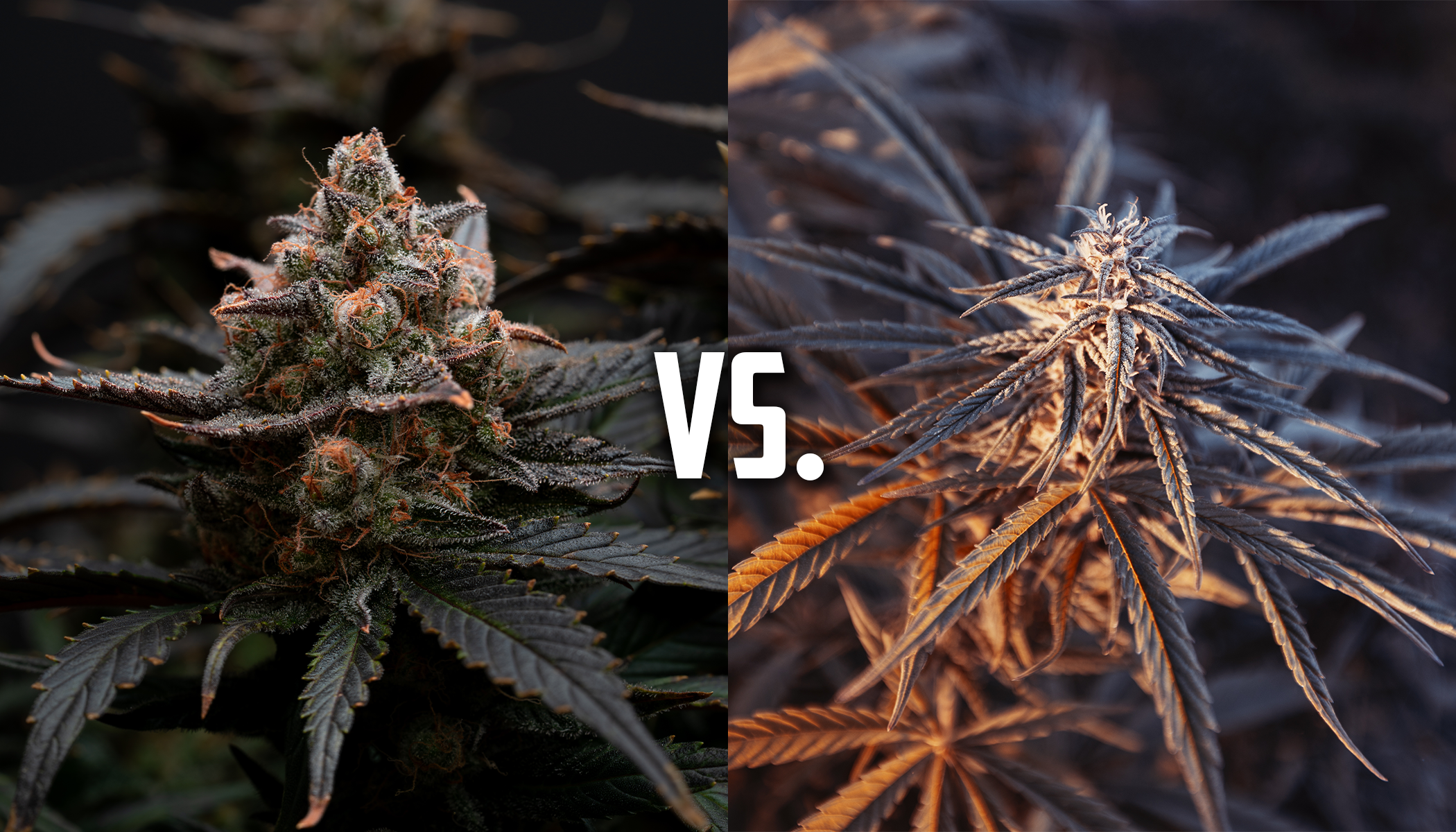
Photoperiod versus autoflowering cannabis strains represent two fundamentally different genetic approaches that deliver distinct advantages depending on a cultivator’s goals, space, and experience level.
Photoperiod versus autoflowering cannabis strains represent two fundamentally different genetic approaches that deliver distinct advantages depending on a cultivator’s goals, space, and experience level. At theStonerReview.com, we cut through the hype with honest, experience-based comparisons drawn from real grows—because choosing the wrong type can mean the difference between a rewarding harvest and a season of frustration. Neither is universally superior; the decision hinges on control versus convenience, yield potential versus speed.
Core Biological Differences

- Photoperiod strains: These rely on light cycle changes to trigger flowering. They typically require 12–14 hours of uninterrupted darkness (12/12 schedule) to initiate bloom, mimicking seasonal shifts. Vegetative growth can be extended indefinitely under 18/6 or longer light periods, allowing growers full control over plant size and structure.
- Autoflowering strains: Derived from Cannabis ruderalis genetics, these flower automatically based on age—usually 3–5 weeks after germination—regardless of light schedule. They maintain a fixed timeline, often completing seed-to-harvest in 8–12 weeks.
Side-by-Side Comparison
| Aspect | Photoperiod Strains | Autoflowering Strains |
|---|---|---|
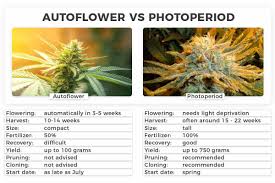
| Grow Cycle | 13–20+ weeks total (veg flexible) | 8–12 weeks total (fixed) |
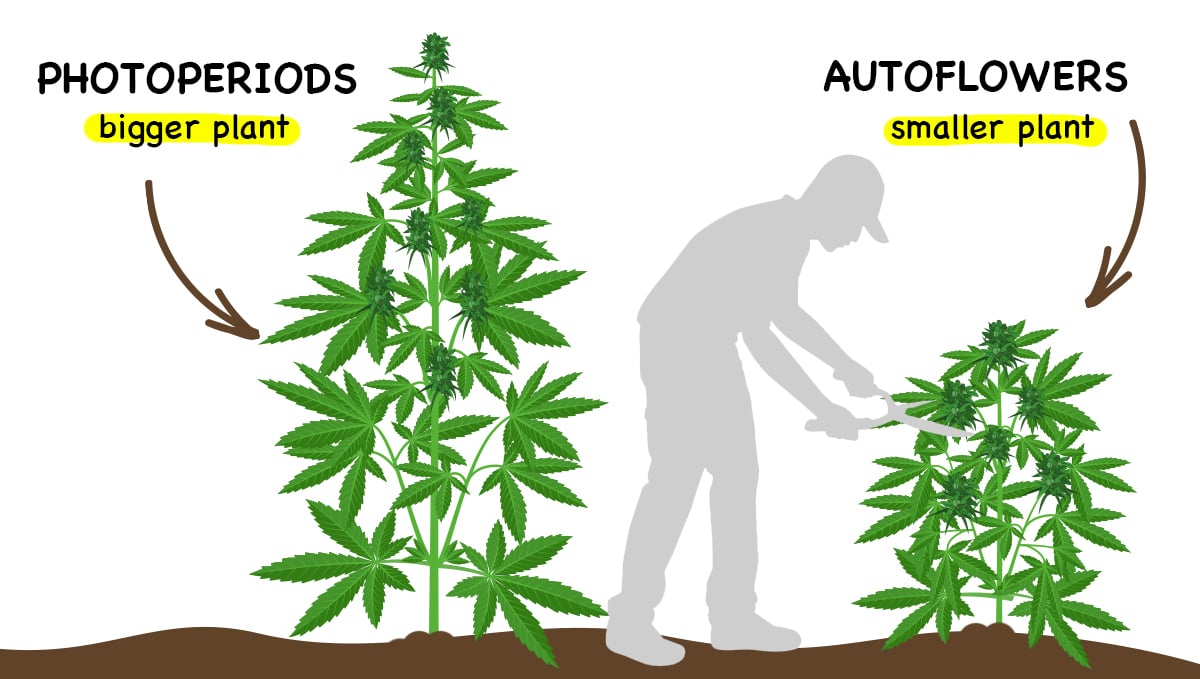
| Size | Larger, taller (100–250+ cm outdoors) | Compact (75–120 cm average) |
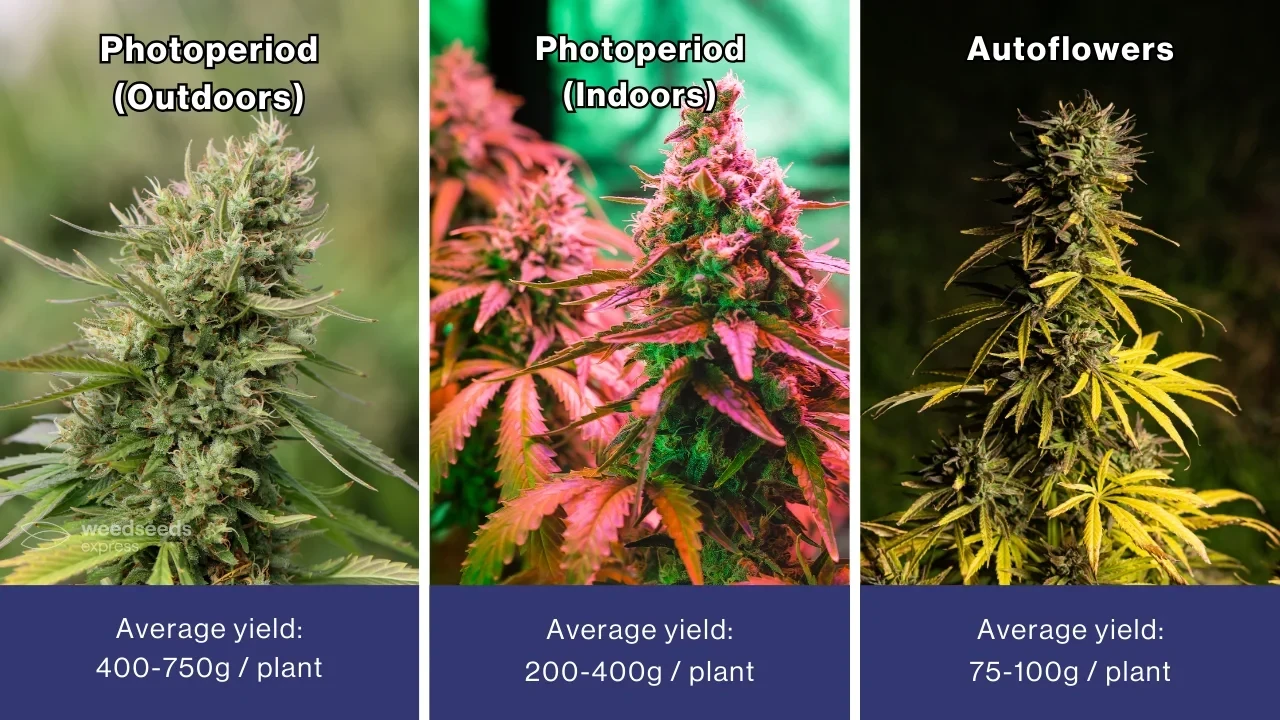
| Yield Potential | Higher per plant (up to 500–750g/plant outdoors in ideal conditions) | Lower per plant (75–150g typical), but faster turnover allows multiple cycles |
| Potency | Often higher THC options (20–30%+ common) | Close in modern lines (16–25%+), but historically lower |
| Light Management | Strict 12/12 required in flower; light leaks risk hermaphroditism | Forgiving; 18/6 or 24/0 works well |
| Training | Excellent for topping, SCROG, LST, HST | Limited; avoid heavy stress |
| Cloning | Yes—maintain mother plants | Not practical |
| Best For | Experienced growers, maximum yield, breeding | Beginners, small spaces, quick harvests, multiple runs |
Practical Trade-offs in the Grow Room
Photoperiod advantages shine in controlled environments. Extend veg time for massive plants, apply advanced training techniques, and select elite clones for consistent genetics. They reward patience with denser buds, richer terpene profiles, and higher overall biomass. However, they demand precise light management—tying directly into our previous discussion on light leak prevention—and longer commitment. A single male or hermie can ruin months of work.
Autoflowers excel in simplicity and speed. Ideal for balconies, small tents, or stealth grows, they tolerate minor environmental fluctuations better and allow several harvests per year. Modern autoflowers from reputable breeders have narrowed the potency and quality gap significantly, though they still generally produce smaller plants with less room for recovery from major stress. Overfeeding or aggressive training can stunt them permanently.

Real-World Considerations for Your Setup
If space is limited or you are new to cultivation, start with autos for quick wins and confidence-building. For serious production or breeding projects, photoperiods offer unmatched potential—especially when paired with the sexing and hermaphrodite identification techniques we’ve covered. Many experienced growers run both: autos for personal stock and quick variety testing, photoperiods for scale and keepers.
Modern breeding has blurred lines, with high-performing autos rivaling older photoperiods in quality. Test multiple lines yourself; genetics and grower skill ultimately determine outcomes.
This balanced perspective equips readers to make informed decisions that align with their lifestyle and goals—whether chasing massive outdoor hauls in prime seasons or squeezing discreet indoor cycles year-round. At theStonerReview.com, we document these realities alongside global strain hunts, destination guides, and the unfiltered cultivation stories that build lasting loyalty. Our shared mission includes curating the authentic gear and apparel that embodies this pursuit.

Nurse Short-Sleeve Unisex T-Shirt
Graphic cotton for smoke spots, floors, and real rooms.
Shop Now →If you are running specific strains or have details about your grow space and objectives, share them for tailored recommendations. Which direction are you leaning for your next run, and what challenges have you encountered so far?
Nose First, Percentage Second
Lab printouts are useful. They are not the whole story. A cut that smells loud, cured clean, and burns white will outperform a bigger THC number that tastes like cardboard. Ask for the nose. Ask who grew it. Ask what the jar smelled like when it opened — not just what the sticker claims.
At The Stoner Review we score what we actually smoke: flavor, effect shape, ash, and whether we would buy it again with our own money. That is the difference between a menu write-up and a field note.
Keep Reading on The Stoner Review
More field notes from the same smoke-stained notebook:
Find more gritty, honest stories, strain reviews, travel guides, and multi-minded stoner perspectives at theStonerReview.com/blog.


